
Predator Hunting
5 Essential Accessories for Your Shotgun

So, suppose you are a proud owner of a shotgun that was never touched by an aftermarket accessory. You might be pretty content with its performance, but they say the sky’s the limit when it comes to improvements. Those ‘they’ are pretty insightful, as the potential lurking within your scattergun can be truly realized only with the help of accessories. You might be surprised to learn that there’s a whole world of aftermarket products designed to make your shotgun even better (if you are looking for a shotgun, here are 5 great home-defense options). In this article, we’ll explore five categories of shotgun accessories that can enhance your firearm’s performance and efficiency.

Table of Contents
Weapon Lights
Slings
Side Saddles
Shotgun Sights
Recoil Pads
Conclusion
FAQs
Weapon Lights: Shedding Light on the Situation
The first category of shotgun accessories we’ll discuss is weapon lights. These nifty little gadgets attach to your shotgun’s barrel or rail, illuminating your surroundings and making it easier to see and aim in low-light conditions. Whether you’re hunting at dawn, dusk, or in the dead of night, a weapon light can illuminate your way in the dark.
Not only do weapon lights help you see, but they can also serve as an intimidation tactic when used on home-defense shotguns. Imagine the look on a home intruder’s face once they’re suddenly dazzled by a blinding beam of light. You might end such an unpleasant encounter without wasting a single shell.
There are several styles of mounting available for shotgun lights. The first one offers a light integrated into a forend either directly or through a mount. Such a configuration allows for a smoother, more natural fit of shotgun lights. Streamlight is a brand known for its forend-mounted lights for popular pump-action shotguns like Mossbergs and Remingtons. The TL Racker weapon light offers 1000 Lumens packed in a compact nylon body.
Another option is a regular mountable light. If your shotgun is equipped with a Picatinny rail, you can mount pretty much any weapon light you want. The Nightstick LGL-150 can be one such example. The brand made lighting products their major specialty, so quality is assured.
Slings: Taking the Weight Off Your Shoulders
Next on our list of shotgun accessories are slings. Everyone who’s ever tried carrying a shotgun around for an extended period knows it can become pretty tiresome after a while. It can get pretty tiring after a while. A good sling can not only distribute the weight of your shotgun more evenly across your body, but it also frees up your hands for other tasks. Those can include anything from withdrawing an item from your backpack to calling 9-1-1. Whether you’re trekking through the woods on a hunting expedition or navigating a home-defense situation, a sling can make all the difference.
Single-point slings attach to your shotgun at a single point, usually near the receiver, allowing the gun to hang freely across your chest or at your side. Such slings are easy to use and allow for quick transitions between different shooting positions. They’re also great for close-quarters situations where maneuverability is key. On the flip side, single-point slings offer limited shooting support and can cause your shotgun to swing around while you’re on the move.
Two-point slings attach at both the forend and the buttstock of your shotgun, providing a more stable and secure carrying solution. They offer superior weapon control and stability compared to their single-point counterparts. They also distribute the weight of your shotgun more evenly, reducing fatigue during extended periods of use. The trade-off for this added stability is reduced maneuverability, making two-point slings less suitable for rapid transitions between shooting positions or tight spaces.
Three-point slings feature a unique design that connects to both the forend and buttstock but also has an additional loop that goes around the wearer’s torso. Three-point slings offer the best of both worlds, combining the stability of a two-point sling with the maneuverability of a single-point sling. They also provide additional carrying options and can be quickly adjusted to suit your needs. The downside to this versatility is increased complexity. Three-point slings can be more challenging to set up and adjust and may not be the best option for beginners or those looking for a simple, no-frills solution.
Side Saddles: Quick Access Equals Quick Action
Shotguns aren’t particularly known for high round capacity. Fumbling around for shells in your pockets is not only inconvenient but can cost you a trophy and sometimes even life. A sidesaddle is a shell carrier that attaches directly to the side of your shotgun, allowing you to store extra rounds within easy reach. A sidesaddle allows you to reload faster, getting you back into the action with minimal delay.
The biggest concern when choosing a side saddle for a shotgun is shell capacity. Your shotgun’s dimensions and your finances are the only limits here. The more, the better, as it usually goes, but it’s better not to overdo it. The majority of models come in 4-, 5- and 6- round variants, but there are side saddles that can hold as many as 8 shells. All side saddles come with compatibility information, so the chance of you buying a shell holder you can’t use is minimal. The Trius Mossberg 500 12Ga side saddle for 6 shells combines the shell holder with a rail mount so you can get two accessories for the price of one.
Shotgun Sights: Making Every Shot Count
It’s no secret that shotguns are powerful weapons, but you still need a good aim for them to remain effective. Luckily, there are shotgun accessories that can solve that problem as well. Even though these firearms aren’t usually associated with any optics, sights are still used to help with target acquisition.
There are some sight models designed specifically for shotguns, but shotgun owners utilize several traditional varieties, including bead sights, ghost ring sights, and red dot sights. Each type has its own advantages, so it’s important to choose the one that best suits your needs and preferences. The HIVIZ CompSight, for example, offers a sleek profile and the opportunity to aim in darkness.
Recoil Pads: The Unsung Heroes of Comfort and Control
Recoil pads are essentially shock absorbers for your shoulder, cushioning the blow from your shotgun’s powerful kick. But do they make that much of a difference? The answer is a resounding yes! By reducing felt recoil, these pads can help minimize discomfort and fatigue, allowing you to shoot for longer periods without feeling like you’ve been on the wrong end of a heavyweight boxing match.
Recoil pads not only save your shoulder from bruising but can also improve your shooting performance. Thanks to reduced recoil, you can more easily maintain control over your shotgun, which results in faster follow-up shots and improved accuracy. A true win-win situation!
The major thing to consider is recoil pad materials. All pads are designed specifically to reduce torque and be relatively comfortable to lean against. The Hogue EZG Medium recoil pad offers a rigid material that grinds easily without cracking.
Conclusion: Accessorize for Success
Your shotgun is a powerful tool, but with the right accessories, you can bring its performance to a much higher level. By investing in weapon lights, slings, side saddles, shotgun sights, and recoil pads, you’ll be able to make the most out of your shotgun. Just remember, with great power comes great responsibility – and a whole lot of fun!
FAQs
What are the essential shotgun accessories for a hunter?
The list of must-have accessories for a shotgun hunter includes all the items mentioned in this article: a comfortable sling for easy carrying, a recoil pad for comfort, a weapon light for low-light visibility, a shotgun sight for improved accuracy and a shell carrier or side saddle for quick access to extra ammunition.
What are the different types of shotgun slings?
Firearm slings are classified according to their mounting style. There are single-point slings that attach at one point near the receiver, two-point slings that attach at both the forend and buttstock and three-point slings that look like two-point slings with an additional loop that goes around the wearer’s torso.
Do you need a light on a shotgun?
While not strictly necessary, having a light on a shotgun can be beneficial in certain situations. A weapon light improves visibility and target identification in low-light conditions, such as hunting at dawn or dusk, or during home defense scenarios. It can also serve as an intimidation tactic against potential threats. However, if you primarily use your shotgun in well-lit environments, lights may not be as essential.
What sights do shotguns use?
Shotguns use the types of sights that are also used on other firearms. Those include bead sights, ghost ring sights and red dot sights.
Source link: https://blog.gritrsports.com/5-essential-accessories-for-your-shotgun/ by Timothy Chandler at blog.gritrsports.com
Predator Hunting
Top 5 Charles Daly Shotguns for Hunting, Sporting & Defense

The legality of stockless shotguns varies by jurisdiction. In the United States, many stockless shotguns, often classified as “pistol grip” shotguns, do not fall under the same regulatory requirements as traditional shotguns because they lack a shoulder stock. However, it’s essential to check local laws and regulations, as some states may impose restrictions or requirements related to firearm ownership, including stockless designs.
Source link: https://blog.gritrsports.com/best-charles-daly-shotguns/ by Gritr Sports at blog.gritrsports.com
Predator Hunting
Springfield Armory Pistols for EDC: Hellcat, XD, 1911 EMP [Review]

.elementor-widget-text-editor.elementor-drop-cap-view-stacked .elementor-drop-cap{background-color:#69727d;color:#fff}.elementor-widget-text-editor.elementor-drop-cap-view-framed .elementor-drop-cap{color:#69727d;border:3px solid;background-color:transparent}.elementor-widget-text-editor:not(.elementor-drop-cap-view-default) .elementor-drop-cap{margin-top:8px}.elementor-widget-text-editor:not(.elementor-drop-cap-view-default) .elementor-drop-cap-letter{width:1em;height:1em}.elementor-widget-text-editor .elementor-drop-cap{float:left;text-align:center;line-height:1;font-size:50px}.elementor-widget-text-editor .elementor-drop-cap-letter{display:inline-block}
Springfield Armory has consistently set the bar high with its innovative designs and reliable performance. In this post, we’re taking a closer look at three of Springfield Armory’s latest and greatest pistols for concealed carry: two compact XD pistols, the Hellcats, and the 1911 EMPs. Let’s get started.
.elementor-widget-image{text-align:center}.elementor-widget-image a{display:inline-block}.elementor-widget-image a img[src$=”.svg”]{width:48px}.elementor-widget-image img{vertical-align:middle;display:inline-block}
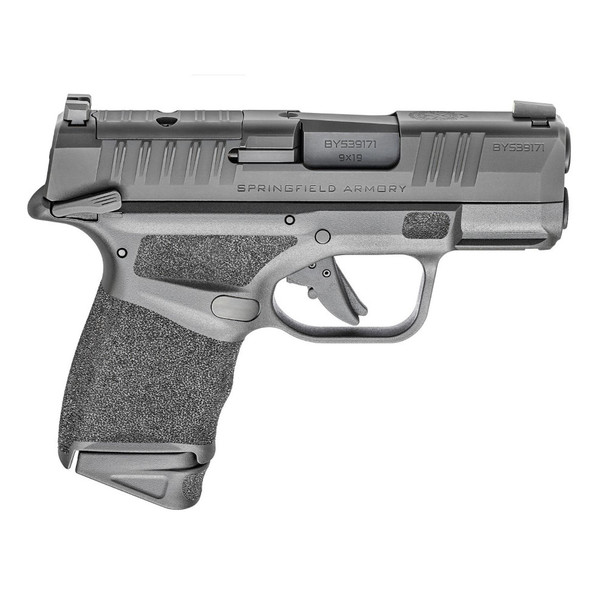

Springfield Armory XD Pistols
Springfield Armory XD Series
It all started back in 2001 with the original XD (eXtreme Duty), a polymer-frame, striker-fired handgun that was designed for folks looking for a dependable EDC pistol that is easy to use. The original XD was loved for its ergonomic grip angle, ambidextrous magazine release, and a host of safety features, including grip safety and trigger safety.
After the initial success, Springfield Armory expanded the lineup in 2008 with the XD-M series. The “M” stands for “Match,” and this line came loaded with features tailored for competitive shooters—a high-end trigger, interchangeable backstraps, and a match-grade barrel that made it super accurate. Around this time, they also launched the XD-S—a single-stack version aimed at the concealed carry crowd. Its slim design made it a hit for those wanting something compact but still powerful.
Next came the XD Mod.2, which brought improved ergonomics and a better grip texture to the table. The XD-E followed, offering a double-action/single-action (DA/SA) option with an exposed hammer and manual safety for extra control. Finally, the XD-S Mod.2, an upgraded version of the original XD-S, packed in new refinements in grip texture and a higher hand position for better control and reduced muzzle rise.
Springfield XD-S Mod.2 OSP Pistols
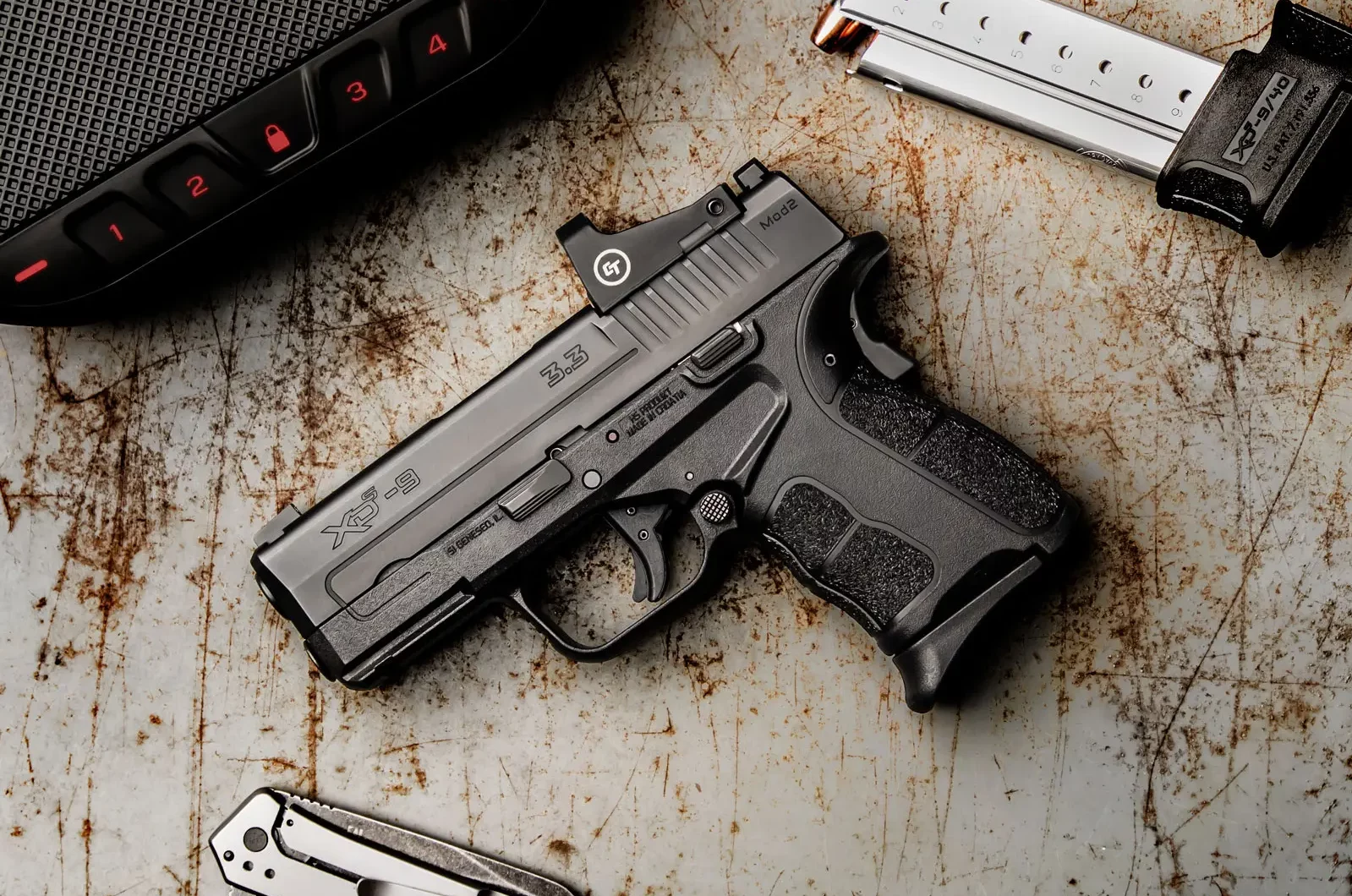
The 2020 introduction of the XD-S Mod.2 OSP brought optics-ready capability to the popular single-stack platform. The XD-S Mod.2 OSP is available in 9mm and .45 ACP calibers, with and without a preinstalled red dot sight (Crimson Trace). The anti-glare U-notch rear sight with a white dot front sight makes aiming easy even without optics. Ergonomics remain central, with a slim profile and comfortable grip enhanced by grip extension.
Springfield XD-M Elite Compact OSP Pistols
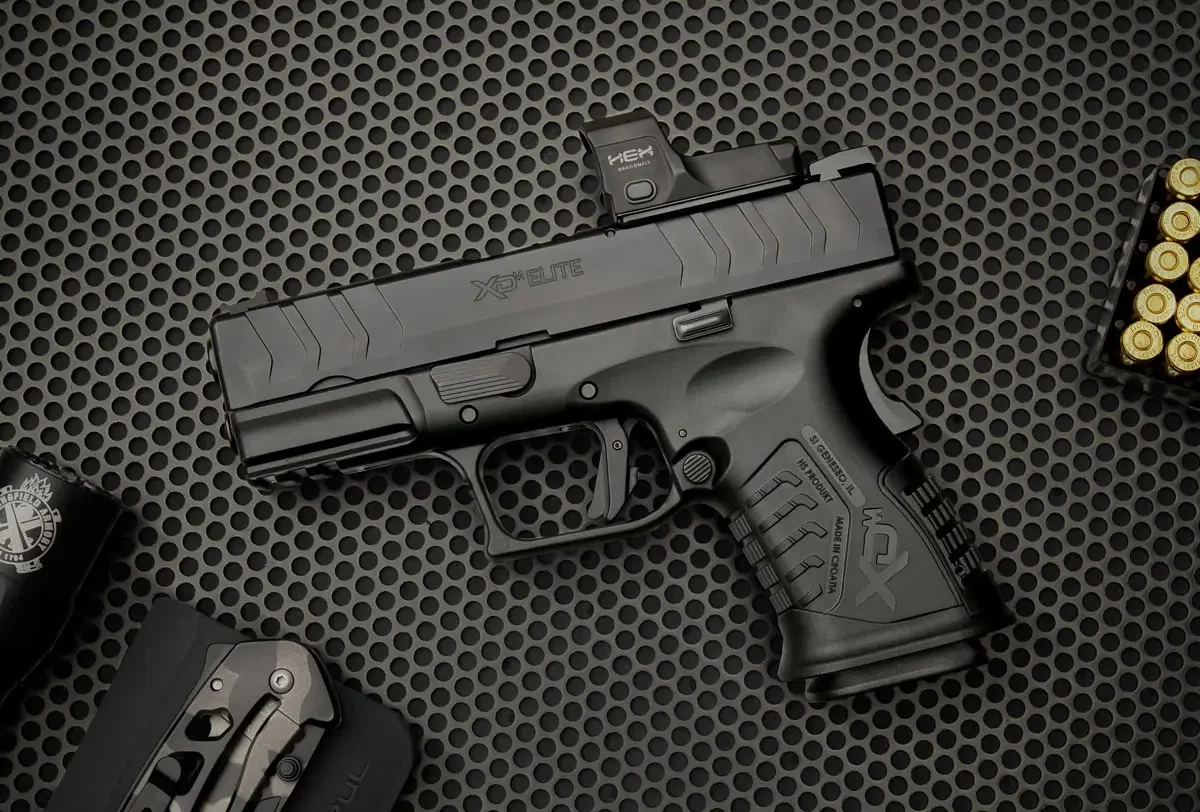
In 2021, Springfield Armory further expanded the lineup with the XD-M Elite Compact OSP. This series features 3.8″ and 4.5″ barrels and is chambered in 10mm, except for the California-compliant 9mm version. The 10mm chambering offers serious stopping power, although it does mean you’ll feel more recoil. The XD-M Elite Compact OSP retains its manageable size and adds a removable cover plate for easy optic integration. It also comes with a stellar META trigger system, ambidextrous controls, and improved slide serrations, making it versatile and user-friendly. The trigger is truly outstanding with a flat face, crisp break, and integral overtravel stop that makes the reset quick, speeding up follow-up shots. You can get this model with or without a HEX Dragonfly red dot sight.
Springfield XD-S vs XD-M: Which One Do You Need for Concealed Carry
When it comes to choosing between the XD-S Mod.2 OSP and the XD-M Elite Compact OSP for everyday carry, each has its unique perks. The XD-S Mod.2 OSP is all about concealability with its slim and compact profile and lightweight design. On the flip side, the XD-M Elite Compact OSP offers more capacity—11 rounds compared to the 7 or 9 rounds in the XD-S Mod.2 OSP—and its 10mm chambering means more stopping power (and also more recoil). The META trigger system is a big win too.
If you’re wondering which one’s easier to shoot—it’s a tie. The XD-S is lighter and has a shorter sight radius, which means more recoil and a bit less accuracy for new shooters. The XD-M, with its longer barrel and better trigger, is likely to be more accurate but also packs a bigger kick with the 10mm chambering. In colder climates, may consider a larger XD-M Elite with a 4.5″ barrel for better handling during winter carry.
As for the similarities, both models are loaded with safety features, including a grip safety, drop safety, and a loaded chamber indicator, providing peace of mind for any gun owner.

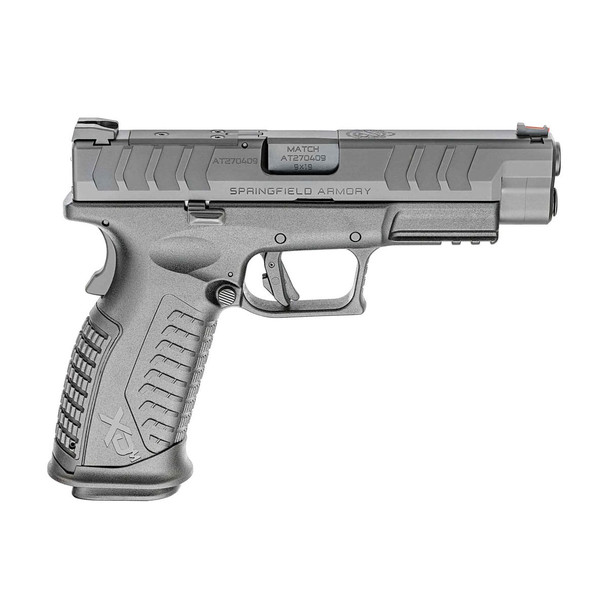
Springfield Armory Ronin 1911 EMP
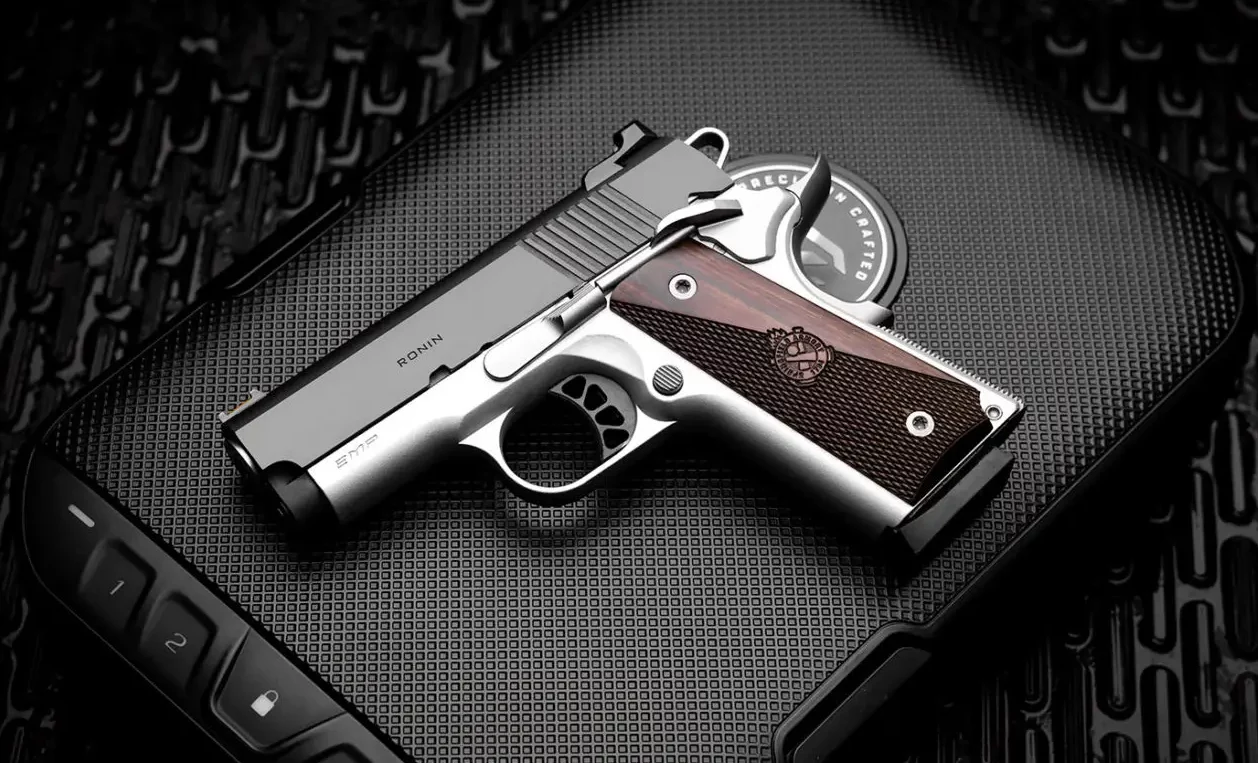
Springfield EMP Series in a Nutshell
The Springfield Armory EMP (Enhanced Micro Pistol) series stands apart in the world of compact 1911 pistols. Unlike traditional 1911s, which use the .45 ACP cartridge, the EMP was designed to fit the smaller 9mm rounds. Springfield didn’t just shrink the slide and barrel; they resized 17 different parts, leading to a shorter slide, frame, extractor, firing pin, and more. This results in a handier 1911, a more compact pistol with a reduced grip radius, which is extremely concealable.
Ronin 1911 EMP: The Springfield 1911 Pistol for Concealed Carry
In 2021, Springfield Armory expanded its Ronin lineup by introducing the Ronin EMP pistols.
The whole Ronin series of Springfield 1911 pistols is distinguished by its blend of classic aesthetics and modern functionality. Its eye-catching two-tone finish and highly durable construction are what sets the Ronin apart from other Springfield 1911 pistols.
So, the Ronin 1911 EMP merges the classic looks and modern efficiency of the Ronin series with the compact EMP design. Available in two models—one with a 3-inch barrel and another with a 4-inch barrel—both are chambered in 9mm. The 3-inch model holds 9+1 rounds, while the 4-inch version holds 10+1.
Both versions feature a forged carbon steel slide, a lightweight aluminum frame with a durable Cerakote finish, and a precisely fitted stainless steel bull barrel. Other standout features include an extended beavertail grip safety, a fiber optic front sight paired with a tactical rack rear sight, and Crossed Cannon wood grips. Ergonomically, the Ronin EMP pistols offer enhanced comfort through their reduced grip radius and are generally designed for better control during shooting.
Practical Use and Everyday Carry
Both Ronin 1911 EMP 9mm pistols are designed for concealed carry and everyday defense. The only things that are different across the models are their barrel length and capacity, which influence several aspects:
Concealability: The 3-inch model, with its shorter slide and grip, is highly concealable, making it ideal for those who prioritize a low-profile carry. The 4-inch model, while slightly larger, offers a balanced mix of concealability and control.
Shootability: The longer sight radius and added weight of the 4-inch model provide better accuracy and reduced muzzle flip and can be more comfortable to handle for shooters with larger hands. The 3-inch model, though more compact, might be more challenging to shoot for less experienced users due to its smaller grip area and lighter frame.
Recoil Control: Both models manage recoil well due to their lighter 9mm chambering and heavier build compared to polymer pistols. The 4-inch version especially handles recoil better, allowing for quicker follow-up shots.
Firepower: With capacities of 9+1 or 10+1 rounds, these pistols pack serious firepower for their size.
In short, the Ronin 1911 EMP series by Springfield Armory offers outstanding carry options with its thoughtful design, exceptional ergonomics, and durable components. Whether you’re new to concealed carry or a seasoned pro, these pistols are a solid choice for everyday defense.

The post Springfield Armory Pistols for EDC: Hellcat, XD, 1911 EMP [Review] appeared first on Blog.GritrSports.com.
Source link: https://blog.gritrsports.com/springfield-armory-pistols-for-cc/ by Maria Mamchits at blog.gritrsports.com
Predator Hunting
The Evolution of the Beretta 9mm Pistols: 92, APX, PX4

Modern Variants of the 92FS and M9
Since the 92FS was introduced, Beretta has rolled out tons of different models. Some were specifically made for law enforcement, like the 92G for the French police, which skips the manual safety and uses a decocker lever instead. Even though the original 92G was discontinued, its slide design lives on in models like the M9A4.
Then there’s the 92D, a model that gets rid of both the safety and decocker lever, relying solely on a double-action trigger. In the ’90s, Beretta also introduced the 96 series chambered in .40 S&W to keep up with law enforcement trends.
Brigadier slide
In 1993, the Brigadier-style slide came out with reinforced locking lugs for added durability and a unique “hump” in the slide’s contour. Although the extended lifespan due to this design is up for debate, many users have noted it reduces recoil and muzzle rise. Because of this, the Brigadier slide is popular in 92 variants used in action pistol competitions.
Come early 2000s, Beretta introduced the 92 Vertec. This model was designed for law enforcement and shooters with smaller hands, featuring a slim backstrap and a shorter reach trigger. It also had an accessory rail, beveled magazine well, and interchangeable front sights. Plus, it ditched the traditional barrel protrusion by shortening the barrel to 4.7 inches but kept the slide the same length.
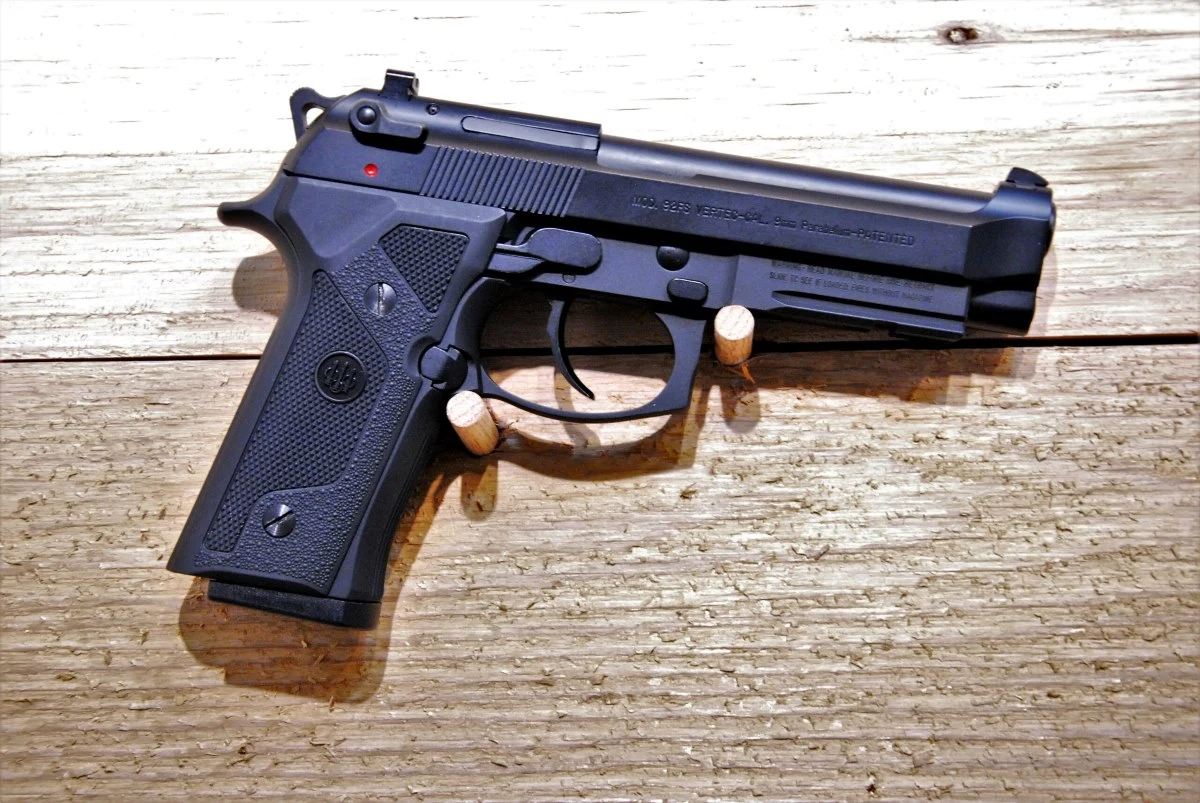
Beretta 92 Vertec
Many modern 92 series variants blend features from both the Brigadier and Vertec models. Examples include the 92FS Brigadier, 92X, M9A3, and M9A4.
The Beretta 92X, introduced in 2019, standardizes the Vertec platform and adds the “Xtreme-S” trigger system, which cuts trigger reset by 40% and offers adjustability for pre-travel (in SAO models) and overtravel. Other highlights include a 3-slot Picatinny rail, a slimmer vertical grip, removable wrap-around grips to switch between Vertec-style and the classic M9 feel, fully removable high-visibility sights, and a universal slide allowing conversion from decocker-safety to decocker-only mode.
The series also includes the 92X Centurion (18 rd), 92X RDO Compact (15 rd) pistols, 92X Performance Carry Optic featuring an optic cut for USPSA competitors, and the lightweight 92X Performance Defensive for IDPA competitions.
New additions to the 92 family are the 92XI and 92GTS pistols. The 92XI is an SAO pistol with a 1911-style frame-mounted safety and comes in a base model, a Tactical model with a threaded barrel and DLC-coated trigger components, and a flashy Squalo edition. Meanwhile, the 92GTS is DA/SA with a twin sear and a decocker-only configuration.
Now, let’s get back to the M9. Around the mid-2000s, the US military requested some tweaks to the original design. Beretta responded with the M9A1, which borrowed features from the 92G-SD like a railed frame, standard 92 grip contour, beveled mag well, and textured grip while keeping the original M9 slide mostly the same.
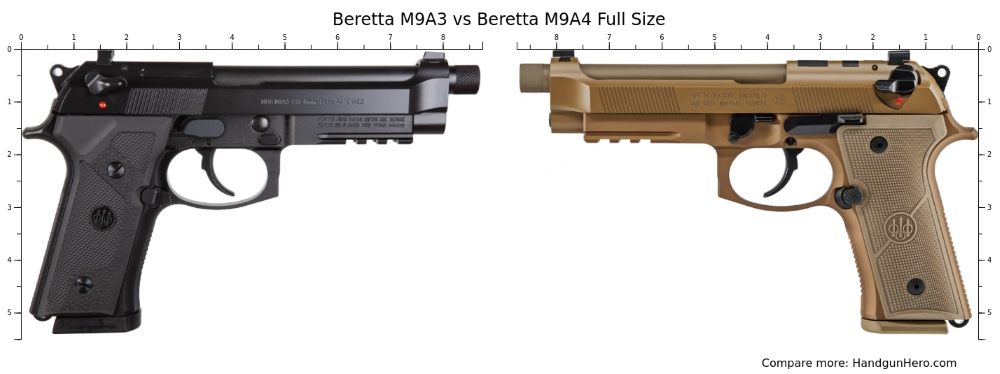
Almost a decade later, Beretta rolled out the M9A3, featuring a replaceable front sight, a railed frame, and a Vertec-style backstrap with an aggressive grip texture. It also includes a wraparound rubber grip to replicate the feel of the standard M9A1 backstrap. The standout feature of the M9A3 is a redesigned slide that allows the gun to switch between FS and G configurations using a conversion kit, something that previously required an expensive and permanent modification by a gunsmith.
The latest iteration, the Beretta M9A4, boasts a red-dot optic compatible slide, dovetailed tritium night sights, an enhanced short-reset Xtreme Trigger System, 18-round sand-resistant magazines, and textured Vertec-style thin grips.
Source link: https://blog.gritrsports.com/beretta-9mm-pistols-92-apx-px4/ by Gritr Sports at blog.gritrsports.com