
Predator Hunting
Browning Buck Mark Practical Review

Last Updated on

American firearm history abounds in surnames of people who left a mark big enough to be remembered for centuries. Browning is one such surname, one of the most celebrated ones in the firearm owners’ community. Many a renowned firearm blueprint was drawn by his hand, the Colt M1911 and M1895 Machine Gun being only some examples. Though not the creation of John Browning himself, the Browning Buck Mark series carries on the legacy of the famed gunsmith. This pistols series now carries the title of the brand’s signature firearm and for a good reason. In this article, we’ll take a look at one fine representative of the family: Browning Buck Mark Practical to see to what the series owes its reputation.
Table of Contents
History of the Buck Mark
Specifications
Design and Aesthetics
Performance Review
Pros and Cons
FAQs
History of the Buck Mark
Though the pistol itself wasn’t introduced until 1985, its origins go a bit further than that, right into the 60s. Driven by competition with such stalwart brands as Ruger and Colt, the company built hefty, steel-framed pistols. The renowned Challenger and Medalist pistols are the most well-known representatives of that group. But the competition at the time wasn’t an easy one either: Ruger’s Mark series, Colt’s Huntsman and then Woodsman, Smith & Wesson Model 41 – all these heavyweights fought for customers’ attention.
The repeating rimfire handguns were thriving through the 1970s, but most of the designs – and the marketing to match – were slowly running their course by the early 1980s. That’s when Browning, fresh off the move from Belgium to Utah, took to the drawing board with a mission: they needed a thorough redesign of the Challenger pistol. By 1985, the gears shifted, and Browning’s Buck Mark was born.
Whereas many aspects of the Browning Buck Mark were a novelty, some elements were inherited from the older models. For example, this pistol uses the same action mechanism as its predecessors, for Browning’s design ingenuity was hard to beat even by Browning themselves.
Improvements over previous iterations were bound to make Buck Mark stand out. While steel was the primary material for all the predecessors of Buck Mark, the new pistol transitioned to a frame and slide crafted from aircraft-grade aluminum alloy. The triggers, once quite chunky, were mended. The Buck Mark entered the market with its head held high and never quite left. The talk has it that the brand’s logo, an antlered deer, was inspired by this very model.
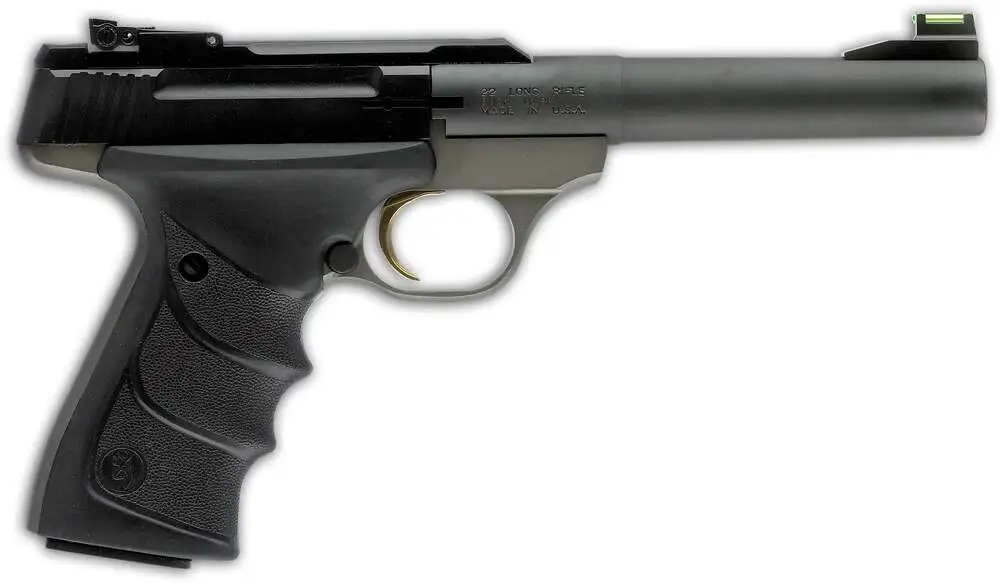
Specifications of Browning Buck Mark Practical
The Browning Buck Mark series of .22 LR pistols is a most extensive one. It comes as no surprise, for the series proudly occupies the place of the brand’s flagship firearm. There are more than 40 models available, all bearing some minor or major difference from one another. Here are the detailed specifications of the Browning Buck Mark Practical:
Overall Dimensions: The overall length of the Buck Mark Practical is approximately 9.5 inches. The gun weighs around 35 ounces, which makes it a relatively lightweight handgun.
Caliber: Browning remains true to their principles, so even the new iterations of Buck Mark are chambered in the original caliber: .22LR.
Magazine Capacity: The magazine of the Buck Mark Practical can hold up to 10 rounds with an additional round in the chamber, giving it a total capacity of 10+1 rounds.
Barrel Length and Material: The barrel length of the Buck Mark Practical is 5.5 inches. The steel barrel sports a matte blue finish.
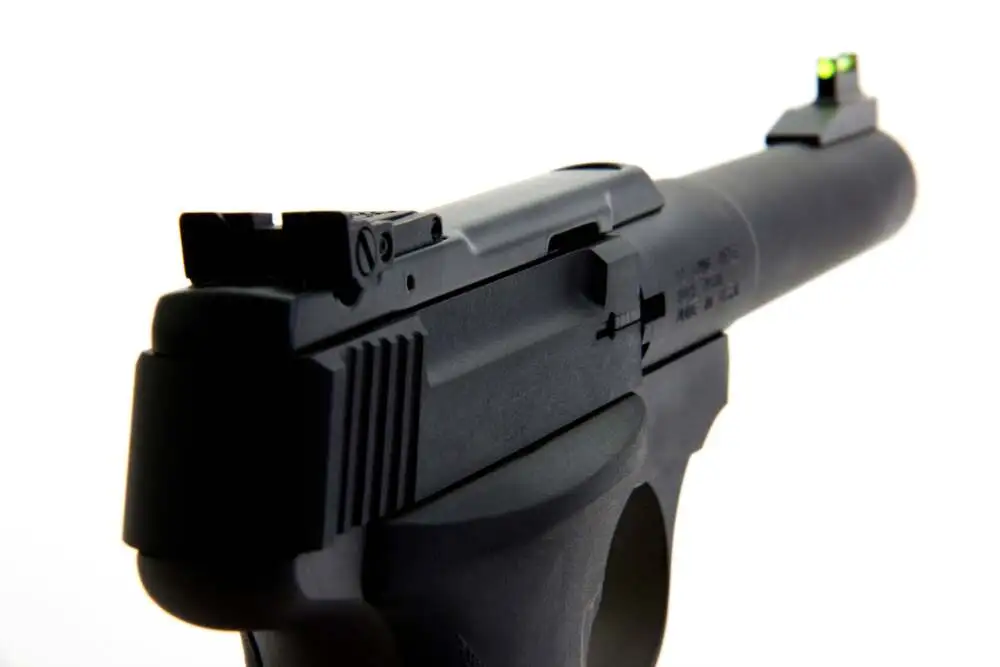
Sight System: The Buck Mark Practical uses white outline Pro-Target 16-click adjustable rear sights and a Truglo/Marble Arms fiber-optic front sight. A pretty decent duo, to be honest.
Design and Aesthetics
The design of the Buck Mark Practical is reminiscent of the original Buck Mark pistol introduced in 1985 but with a few twists.
Let’s start with the barrel. It doesn’t just attach to the frame; it’s virtually fused with it, standing as one entity during every shot. The slide, once bulky, has now been refined to a more minimalist design. The action is now striker-fired with a standard blowback mechanism – the hallmark of contemporary firearm technology. But the most innovative modification is in the ejection port. Instead of opening on one side, it now opens on both. Think less carbon fouling, smoother operation, and more time shooting rather than cleaning.
Now to Buck Mark’s features. The frame is made of a 7075-aluminum alloy and is as strong as it is lightweight. The steel barrel is tensioned at both the front and rear, bringing improved accuracy and making each shot a potential bullseye.
The controls are pretty standard for any other Buck Mark model. The left side boasts a magazine release button, a thumb safety and a slide stop. The latter two stick out from the pistol’s sleek profile, which is hardly an advantage for concealed carry but is a welcome feature for target shooters.
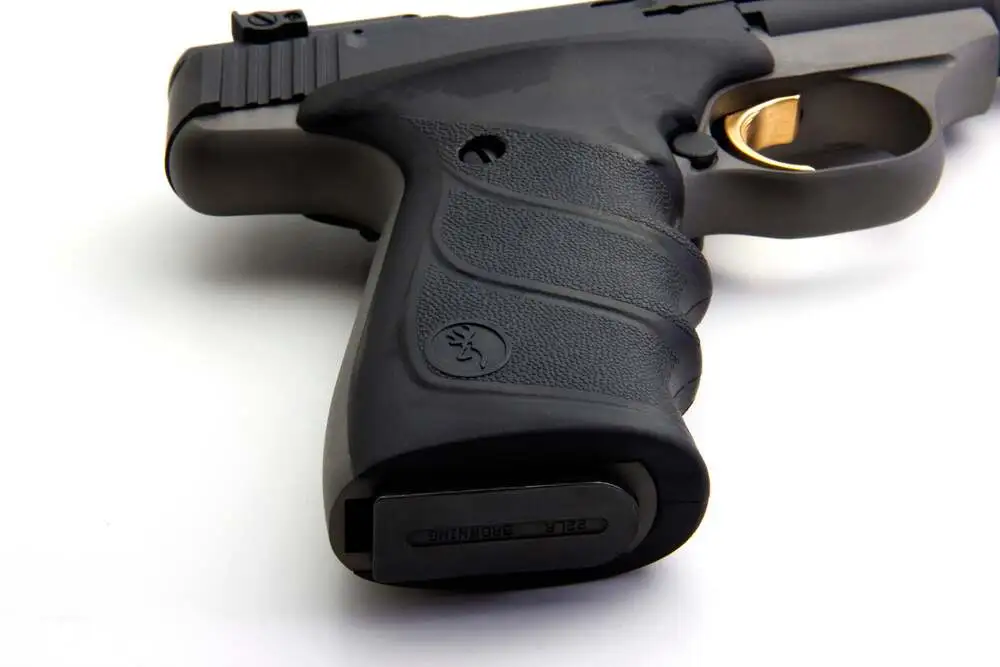
The grip is the brand’s signature Ultragrip RX (URX) made of soft nitrile rubber. With finger grooves carved into it, the grip offers plenty of space even for people with more-than-average-sized hands. The angle is also particularly comfortable, but that’s a common feature for the Browning handguns.
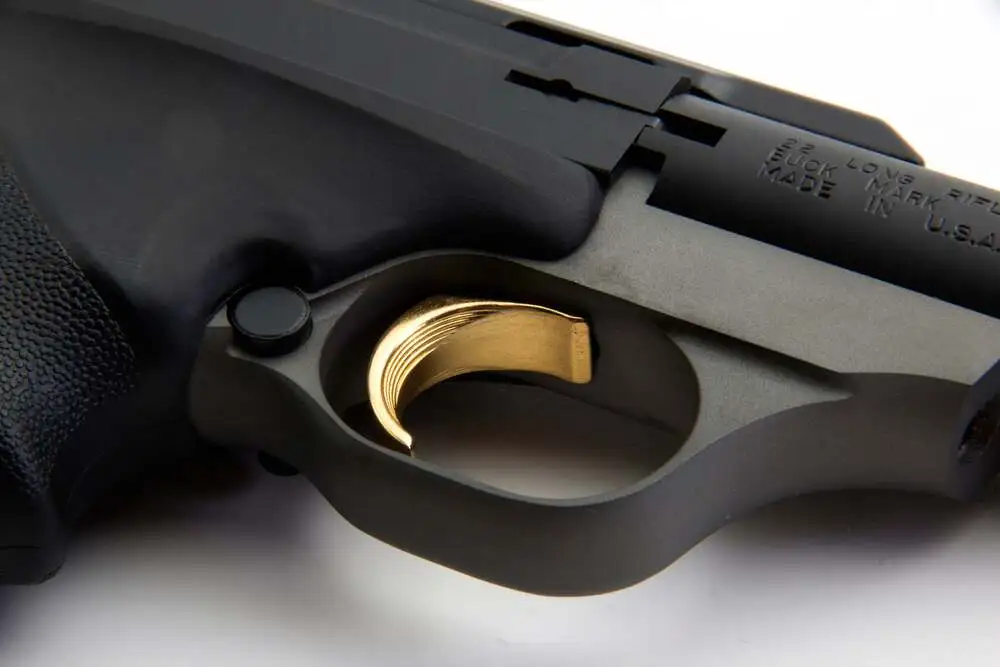
All 41 models of Buck Marker do have noticeable features in common, and Buck Mark Practical is no exception. The golden crescent-shaped trigger has indeed become one of the hallmarks of the series. It is one of the lightest and crispiest .22 LR triggers on the market.
When it comes to aesthetics, the Buck Mark Practical is one of the most presentable models. Its all black-and-grey design might seem plain to some, but others will see the reticent elegance of the pistol’s demeanor. It’s not encumbered with excessive patterning or intricately cut sleeve design. The family has fancier, louder models, but this one lives up to its name, staying practical while still looking magnificent. It also has a more good-looking sibling, Buck Mark Plus Practical, that features and even blacker exterior and a Picatinny rail for mounting accessories.
Performance Review
I don’t personally own a Buck Mark Practical (that will probably change soon, but I want to give other Buck Marks a try), so we only had one shooting session together. What can I say, I found a new favorite rimfire pistol. Not in one aspect has it disappointed me and there is really nothing else I can ask of a gun.
We all know that a gun is only as accurate as its shooter. It can’t make you a marksman: it can either let you channel your accuracy or stand in the way of it. During my testing, I was consistently hitting around an inch at 25 yards. I’m pretty content with that result, given the fact that I’ve tried several types of rounds with different loads. Not a single failure and that’s what I expect a gun to provide.
About recoil management. There isn’t too much innate recoil to .22 LR, so it may seem like manufacturers don’t need to try too hard to reduce it. Browning doesn’t share that outlook. The Buck Mark’s direct-blowback action harnesses the .22 LR’s already mild recoil to deliver something you won’t want to let out of your hands.
The trigger response and reset are nothing short of spectacular. The Buck Mark’s trigger is smooth and crisp and has a light average pull weight of a mere 3.6 pounds. Minimal creep before the sear drops – and here go your accurate shots.
I won’t surprise anyone by saying a semi-auto pistol is quick to fire. But there are all kinds of semi-autos, and they don’t all perform equally well. It was criminally easy to make follow-up shots with Buck Mark Practical, both because of the action and barrel weight.
To put it shortly: the pistol was a delight. I get to shoot new guns every now and then, and while many of them leave a good impression, rare is a firearm that prints into my memory. I’ve put the Buck Mark next on my “guns-to-buy” list. But should probably try out other models before making the final decision.
Pros and Cons
Instead of a conclusion that will repeat everything you’ve read so far, I’ll draw up a list of pros and cons. It’s more convenient and informative. Besides, you already know my opinion about guns.
Pros:
- Direct-blowback action. Better shot-to-shot consistency and reduced cycling load are guaranteed.
- The aircraft-grade aluminum alloy frame: durable, lightweight and affordable.
- The tensioned aluminum outer sleeve takes accuracy to a whole new level.
- The threaded barrel with 1/2×28 threads allows for adding a muzzle brake or suppressor.
- The Pro-Target adjustable rear sights and Truglo/Marble Arms fiber-optic front sight provide excellent assistance with aiming.
- The grip is comfortable and secure, with finger grooves being a gift too pleasant to give up.
- The controls are intuitive and user-friendly.
- The trigger offers a light and crisp pull.
Cons:
- Some may find the controls, like the slide stop and safety, sticking out a bit too much.
- You need to feed it the right ammo. I’ve read some other reviews while preparing this one and failures to eject weren’t uncommon with certain loads.
- The design may not appeal to traditionalists. The possibility of being disliked is not a valid drawback, but I’m writing this to say there are other designs available if this one doesn’t tickle your fancy.
Check out our other Review articles:
FAQs
What is the recoil like on the Browning Buck Mark Practical?
Thanks to its blowback action and rimfire nature, the Buck Mark Practical manages recoil effectively, offering minimal felt recoil and better shot-to-shot consistency.
How does the trigger perform on the Browning Buck Mark Practical?
The trigger response and reset on the Buck Mark Practical are excellent. The trigger is smooth and crisp, with a light average pull weight of just 3.6 pounds.
Can I add accessories to the Browning Buck Mark Practical?
Yes, you can. The Buck Mark Practical has a threaded barrel with 1/2×28 threads for muzzle accessories.
Source link: https://blog.gritrsports.com/browning-buck-mark-practical-review/ by Timothy Chandler at blog.gritrsports.com
Predator Hunting
Top 5 Charles Daly Shotguns for Hunting, Sporting & Defense

The legality of stockless shotguns varies by jurisdiction. In the United States, many stockless shotguns, often classified as “pistol grip” shotguns, do not fall under the same regulatory requirements as traditional shotguns because they lack a shoulder stock. However, it’s essential to check local laws and regulations, as some states may impose restrictions or requirements related to firearm ownership, including stockless designs.
Source link: https://blog.gritrsports.com/best-charles-daly-shotguns/ by Gritr Sports at blog.gritrsports.com
Predator Hunting
Springfield Armory Pistols for EDC: Hellcat, XD, 1911 EMP [Review]

.elementor-widget-text-editor.elementor-drop-cap-view-stacked .elementor-drop-cap{background-color:#69727d;color:#fff}.elementor-widget-text-editor.elementor-drop-cap-view-framed .elementor-drop-cap{color:#69727d;border:3px solid;background-color:transparent}.elementor-widget-text-editor:not(.elementor-drop-cap-view-default) .elementor-drop-cap{margin-top:8px}.elementor-widget-text-editor:not(.elementor-drop-cap-view-default) .elementor-drop-cap-letter{width:1em;height:1em}.elementor-widget-text-editor .elementor-drop-cap{float:left;text-align:center;line-height:1;font-size:50px}.elementor-widget-text-editor .elementor-drop-cap-letter{display:inline-block}
Springfield Armory has consistently set the bar high with its innovative designs and reliable performance. In this post, we’re taking a closer look at three of Springfield Armory’s latest and greatest pistols for concealed carry: two compact XD pistols, the Hellcats, and the 1911 EMPs. Let’s get started.
.elementor-widget-image{text-align:center}.elementor-widget-image a{display:inline-block}.elementor-widget-image a img[src$=”.svg”]{width:48px}.elementor-widget-image img{vertical-align:middle;display:inline-block}
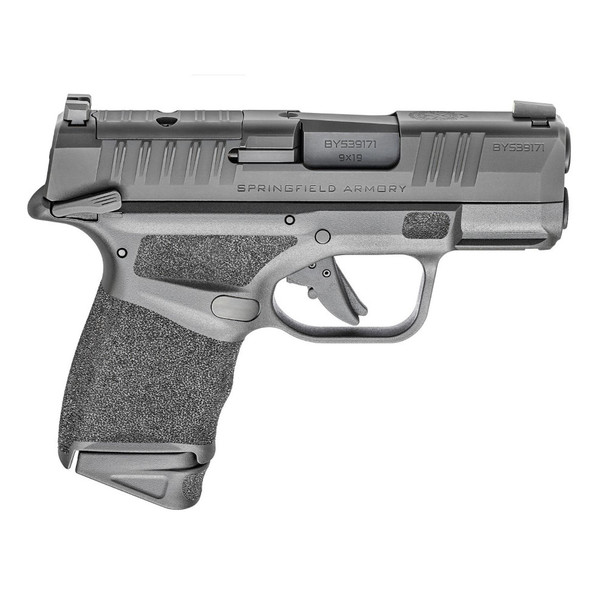

Springfield Armory XD Pistols
Springfield Armory XD Series
It all started back in 2001 with the original XD (eXtreme Duty), a polymer-frame, striker-fired handgun that was designed for folks looking for a dependable EDC pistol that is easy to use. The original XD was loved for its ergonomic grip angle, ambidextrous magazine release, and a host of safety features, including grip safety and trigger safety.
After the initial success, Springfield Armory expanded the lineup in 2008 with the XD-M series. The “M” stands for “Match,” and this line came loaded with features tailored for competitive shooters—a high-end trigger, interchangeable backstraps, and a match-grade barrel that made it super accurate. Around this time, they also launched the XD-S—a single-stack version aimed at the concealed carry crowd. Its slim design made it a hit for those wanting something compact but still powerful.
Next came the XD Mod.2, which brought improved ergonomics and a better grip texture to the table. The XD-E followed, offering a double-action/single-action (DA/SA) option with an exposed hammer and manual safety for extra control. Finally, the XD-S Mod.2, an upgraded version of the original XD-S, packed in new refinements in grip texture and a higher hand position for better control and reduced muzzle rise.
Springfield XD-S Mod.2 OSP Pistols
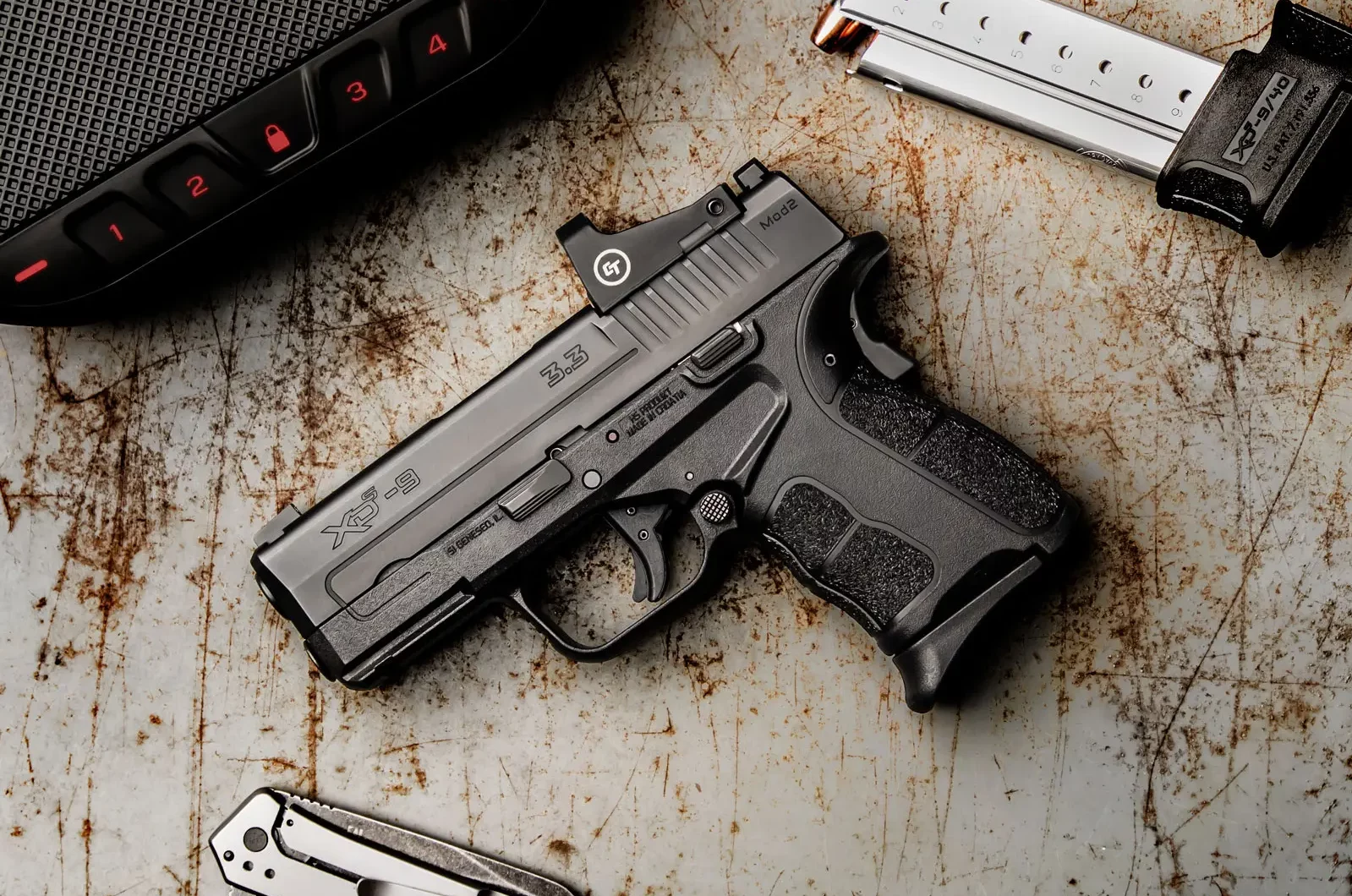
The 2020 introduction of the XD-S Mod.2 OSP brought optics-ready capability to the popular single-stack platform. The XD-S Mod.2 OSP is available in 9mm and .45 ACP calibers, with and without a preinstalled red dot sight (Crimson Trace). The anti-glare U-notch rear sight with a white dot front sight makes aiming easy even without optics. Ergonomics remain central, with a slim profile and comfortable grip enhanced by grip extension.
Springfield XD-M Elite Compact OSP Pistols
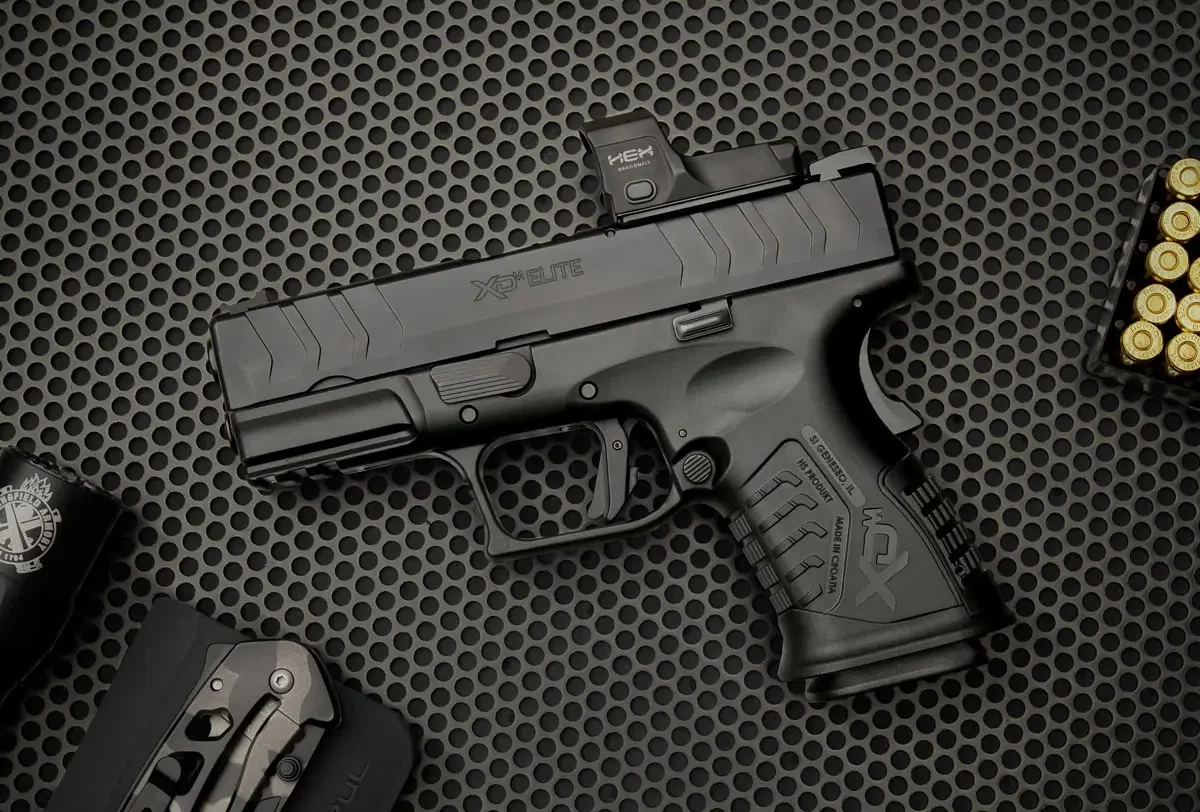
In 2021, Springfield Armory further expanded the lineup with the XD-M Elite Compact OSP. This series features 3.8″ and 4.5″ barrels and is chambered in 10mm, except for the California-compliant 9mm version. The 10mm chambering offers serious stopping power, although it does mean you’ll feel more recoil. The XD-M Elite Compact OSP retains its manageable size and adds a removable cover plate for easy optic integration. It also comes with a stellar META trigger system, ambidextrous controls, and improved slide serrations, making it versatile and user-friendly. The trigger is truly outstanding with a flat face, crisp break, and integral overtravel stop that makes the reset quick, speeding up follow-up shots. You can get this model with or without a HEX Dragonfly red dot sight.
Springfield XD-S vs XD-M: Which One Do You Need for Concealed Carry
When it comes to choosing between the XD-S Mod.2 OSP and the XD-M Elite Compact OSP for everyday carry, each has its unique perks. The XD-S Mod.2 OSP is all about concealability with its slim and compact profile and lightweight design. On the flip side, the XD-M Elite Compact OSP offers more capacity—11 rounds compared to the 7 or 9 rounds in the XD-S Mod.2 OSP—and its 10mm chambering means more stopping power (and also more recoil). The META trigger system is a big win too.
If you’re wondering which one’s easier to shoot—it’s a tie. The XD-S is lighter and has a shorter sight radius, which means more recoil and a bit less accuracy for new shooters. The XD-M, with its longer barrel and better trigger, is likely to be more accurate but also packs a bigger kick with the 10mm chambering. In colder climates, may consider a larger XD-M Elite with a 4.5″ barrel for better handling during winter carry.
As for the similarities, both models are loaded with safety features, including a grip safety, drop safety, and a loaded chamber indicator, providing peace of mind for any gun owner.

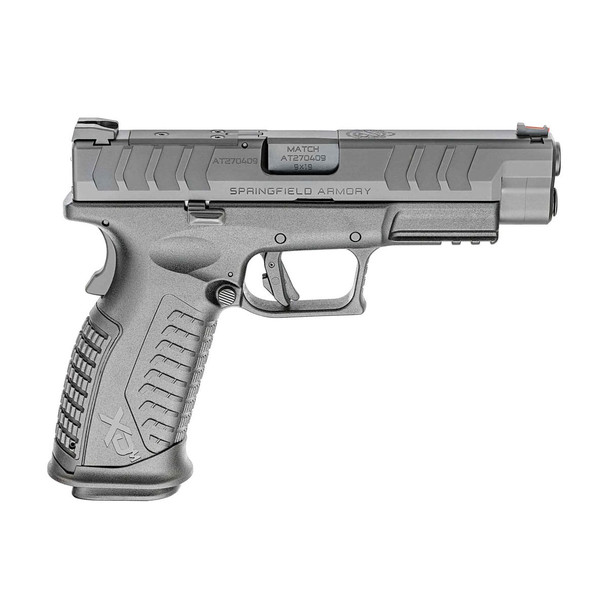
Springfield Armory Ronin 1911 EMP
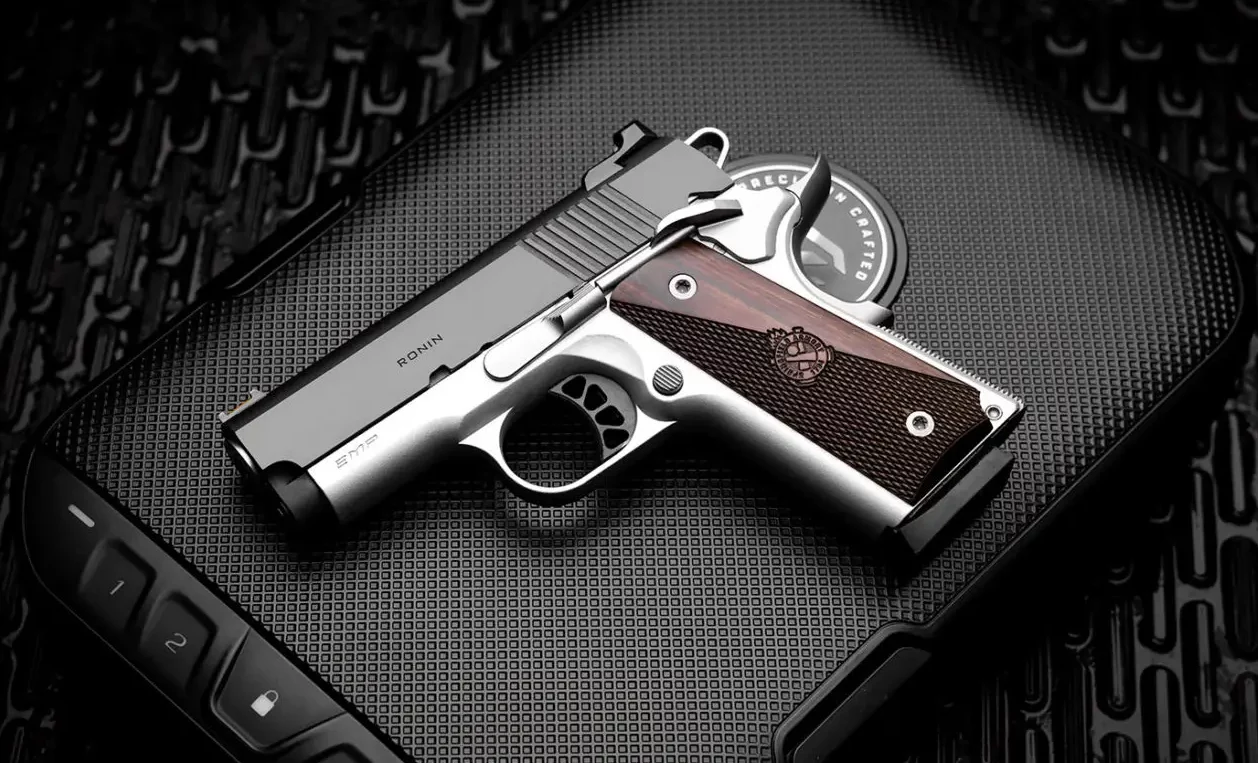
Springfield EMP Series in a Nutshell
The Springfield Armory EMP (Enhanced Micro Pistol) series stands apart in the world of compact 1911 pistols. Unlike traditional 1911s, which use the .45 ACP cartridge, the EMP was designed to fit the smaller 9mm rounds. Springfield didn’t just shrink the slide and barrel; they resized 17 different parts, leading to a shorter slide, frame, extractor, firing pin, and more. This results in a handier 1911, a more compact pistol with a reduced grip radius, which is extremely concealable.
Ronin 1911 EMP: The Springfield 1911 Pistol for Concealed Carry
In 2021, Springfield Armory expanded its Ronin lineup by introducing the Ronin EMP pistols.
The whole Ronin series of Springfield 1911 pistols is distinguished by its blend of classic aesthetics and modern functionality. Its eye-catching two-tone finish and highly durable construction are what sets the Ronin apart from other Springfield 1911 pistols.
So, the Ronin 1911 EMP merges the classic looks and modern efficiency of the Ronin series with the compact EMP design. Available in two models—one with a 3-inch barrel and another with a 4-inch barrel—both are chambered in 9mm. The 3-inch model holds 9+1 rounds, while the 4-inch version holds 10+1.
Both versions feature a forged carbon steel slide, a lightweight aluminum frame with a durable Cerakote finish, and a precisely fitted stainless steel bull barrel. Other standout features include an extended beavertail grip safety, a fiber optic front sight paired with a tactical rack rear sight, and Crossed Cannon wood grips. Ergonomically, the Ronin EMP pistols offer enhanced comfort through their reduced grip radius and are generally designed for better control during shooting.
Practical Use and Everyday Carry
Both Ronin 1911 EMP 9mm pistols are designed for concealed carry and everyday defense. The only things that are different across the models are their barrel length and capacity, which influence several aspects:
Concealability: The 3-inch model, with its shorter slide and grip, is highly concealable, making it ideal for those who prioritize a low-profile carry. The 4-inch model, while slightly larger, offers a balanced mix of concealability and control.
Shootability: The longer sight radius and added weight of the 4-inch model provide better accuracy and reduced muzzle flip and can be more comfortable to handle for shooters with larger hands. The 3-inch model, though more compact, might be more challenging to shoot for less experienced users due to its smaller grip area and lighter frame.
Recoil Control: Both models manage recoil well due to their lighter 9mm chambering and heavier build compared to polymer pistols. The 4-inch version especially handles recoil better, allowing for quicker follow-up shots.
Firepower: With capacities of 9+1 or 10+1 rounds, these pistols pack serious firepower for their size.
In short, the Ronin 1911 EMP series by Springfield Armory offers outstanding carry options with its thoughtful design, exceptional ergonomics, and durable components. Whether you’re new to concealed carry or a seasoned pro, these pistols are a solid choice for everyday defense.

The post Springfield Armory Pistols for EDC: Hellcat, XD, 1911 EMP [Review] appeared first on Blog.GritrSports.com.
Source link: https://blog.gritrsports.com/springfield-armory-pistols-for-cc/ by Maria Mamchits at blog.gritrsports.com
Predator Hunting
The Evolution of the Beretta 9mm Pistols: 92, APX, PX4

Modern Variants of the 92FS and M9
Since the 92FS was introduced, Beretta has rolled out tons of different models. Some were specifically made for law enforcement, like the 92G for the French police, which skips the manual safety and uses a decocker lever instead. Even though the original 92G was discontinued, its slide design lives on in models like the M9A4.
Then there’s the 92D, a model that gets rid of both the safety and decocker lever, relying solely on a double-action trigger. In the ’90s, Beretta also introduced the 96 series chambered in .40 S&W to keep up with law enforcement trends.
Brigadier slide
In 1993, the Brigadier-style slide came out with reinforced locking lugs for added durability and a unique “hump” in the slide’s contour. Although the extended lifespan due to this design is up for debate, many users have noted it reduces recoil and muzzle rise. Because of this, the Brigadier slide is popular in 92 variants used in action pistol competitions.
Come early 2000s, Beretta introduced the 92 Vertec. This model was designed for law enforcement and shooters with smaller hands, featuring a slim backstrap and a shorter reach trigger. It also had an accessory rail, beveled magazine well, and interchangeable front sights. Plus, it ditched the traditional barrel protrusion by shortening the barrel to 4.7 inches but kept the slide the same length.
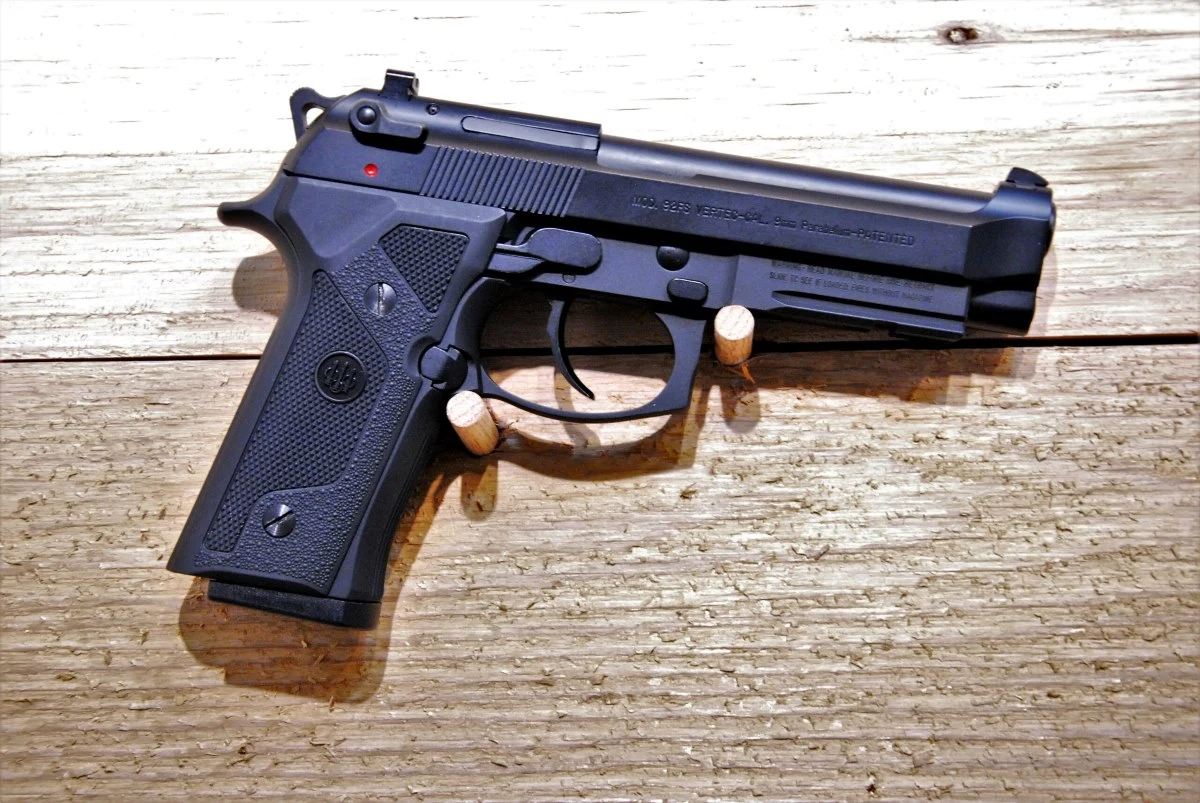
Beretta 92 Vertec
Many modern 92 series variants blend features from both the Brigadier and Vertec models. Examples include the 92FS Brigadier, 92X, M9A3, and M9A4.
The Beretta 92X, introduced in 2019, standardizes the Vertec platform and adds the “Xtreme-S” trigger system, which cuts trigger reset by 40% and offers adjustability for pre-travel (in SAO models) and overtravel. Other highlights include a 3-slot Picatinny rail, a slimmer vertical grip, removable wrap-around grips to switch between Vertec-style and the classic M9 feel, fully removable high-visibility sights, and a universal slide allowing conversion from decocker-safety to decocker-only mode.
The series also includes the 92X Centurion (18 rd), 92X RDO Compact (15 rd) pistols, 92X Performance Carry Optic featuring an optic cut for USPSA competitors, and the lightweight 92X Performance Defensive for IDPA competitions.
New additions to the 92 family are the 92XI and 92GTS pistols. The 92XI is an SAO pistol with a 1911-style frame-mounted safety and comes in a base model, a Tactical model with a threaded barrel and DLC-coated trigger components, and a flashy Squalo edition. Meanwhile, the 92GTS is DA/SA with a twin sear and a decocker-only configuration.
Now, let’s get back to the M9. Around the mid-2000s, the US military requested some tweaks to the original design. Beretta responded with the M9A1, which borrowed features from the 92G-SD like a railed frame, standard 92 grip contour, beveled mag well, and textured grip while keeping the original M9 slide mostly the same.
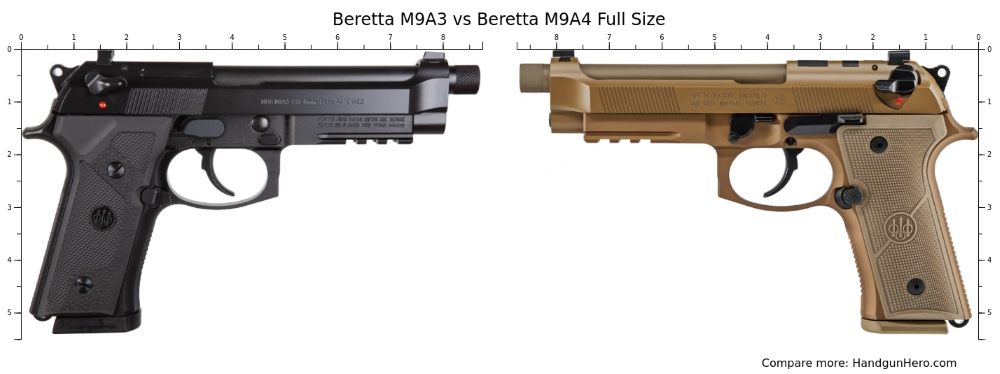
Almost a decade later, Beretta rolled out the M9A3, featuring a replaceable front sight, a railed frame, and a Vertec-style backstrap with an aggressive grip texture. It also includes a wraparound rubber grip to replicate the feel of the standard M9A1 backstrap. The standout feature of the M9A3 is a redesigned slide that allows the gun to switch between FS and G configurations using a conversion kit, something that previously required an expensive and permanent modification by a gunsmith.
The latest iteration, the Beretta M9A4, boasts a red-dot optic compatible slide, dovetailed tritium night sights, an enhanced short-reset Xtreme Trigger System, 18-round sand-resistant magazines, and textured Vertec-style thin grips.
Source link: https://blog.gritrsports.com/beretta-9mm-pistols-92-apx-px4/ by Gritr Sports at blog.gritrsports.com