
Predator Hunting
Springfield Armory 2020 Rimfire Rifles: First Impressions and Detailed Review

Last Updated on

The market for bolt action rimfire rifles is by no means scarce, at least now it isn’t. At some point, every firearm brand just decided they needed a version of their own, and I can’t really complain about that. After all, competition spurs quality growth. Companies need to go to greater lengths to win over shooters, and last year, Springfield Armory joined that race. The Model 2020 Rimfire Rifle made quite a few waves at the time of its release. Much of that was attributed to the gorgeous looks of one of the two models. Now that the ripple has settled, I too decided to give both of them a look. Here’s my review of Springfield Armory 2020 Rimfire Rifles.
Table of Contents
The Two Faces of the Model 2020 Rimfire
Model 2020 Rimfire Target Review
Stock
Grip
Barrel
Action
Trigger
Magazine
Range Test
Model 2020 Rimfire Classic Review
FAQs
The Two Faces of the Model 2020 Rimfire
The series features two models: the streamlined Target and the elegant Classic.
The Target Model is designed with a focus on precision shooting, not pinpoint accuracy, but precision nonetheless. It boasts an extremely comfortable polymer stock modeled after the popular Model 2020 Waypoint and a heavy, threaded barrel. This latter allows for the attachment of suppressors and muzzle devices, which gives you more customization options.
The Classic Model, on the other hand, leans towards tradition both in design and functionality. Unlike the Target Model, it features an absolutely marvelous wood stock – the staple of its classy appeal. It also features a sporter barrel contour which is not threaded. There are four grades of these magnificent Turkish Walnut stocks: Select Satin, Grade A, Grade AA and Grade AAA. The higher the grade, the more detailed the walnut’s figure and grain.
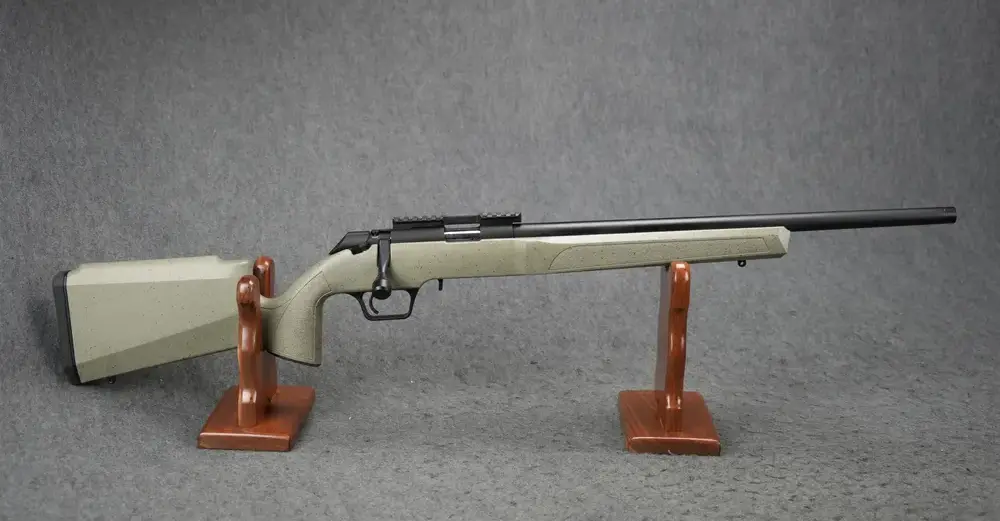
Which ones did I shoot? I got my hands on a Sage Target and Grade AA Classic Model 2020 Rimfire rifles. I can’t describe how much I’m into wooden stocks, and it was an immense pleasure to hold this one. But I got ahead of myself – I mostly shot Sage Target one because I assume not many people will want to pay more for a wooden stock. I definitely would, but that’s me. And this review is for you.
Springfield Armory Model 2020 Rimfire Target Review
Stock
The first thing you touch is the stock unless you grab firearms from a barrel. The word “synthetic” often evokes suspicion or lowers one’s expectations because polymer stocks are, well, not always great. They are often seen as a means to skimp on production costs, but that’s not the case with this rifle at all. The stock of the Model 2020 Rimfire Target takes after the stock of the renowned Waypoint rifle, the brand’s other creation. Truth be told, they chose a good role model. A single grip will reveal the high-quality plastic with a very pleasant texture. The gun feels lightweight, but not in an excessive way.
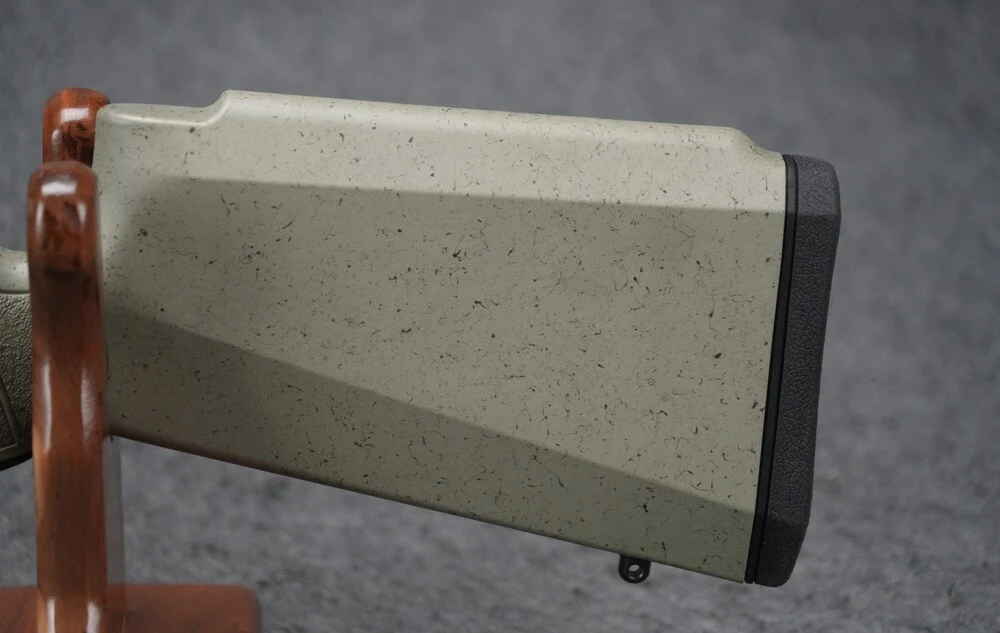
The butt stock features a slightly raised flat cheek comb. It’s not adjustable, but that shouldn’t be a problem. The countered rubber recoil pad helps the stock feel comfortable against the shoulder.
The hollowed fore-end is broad and flat, reinforced from the inside with five ribs. The fore-end makes it much easier to shoot the rifle off-hand or from one of the regular positions. It also feels like it was destined to be shot with shooting bags: I tried it and it felt like a perfect duo.
Grip
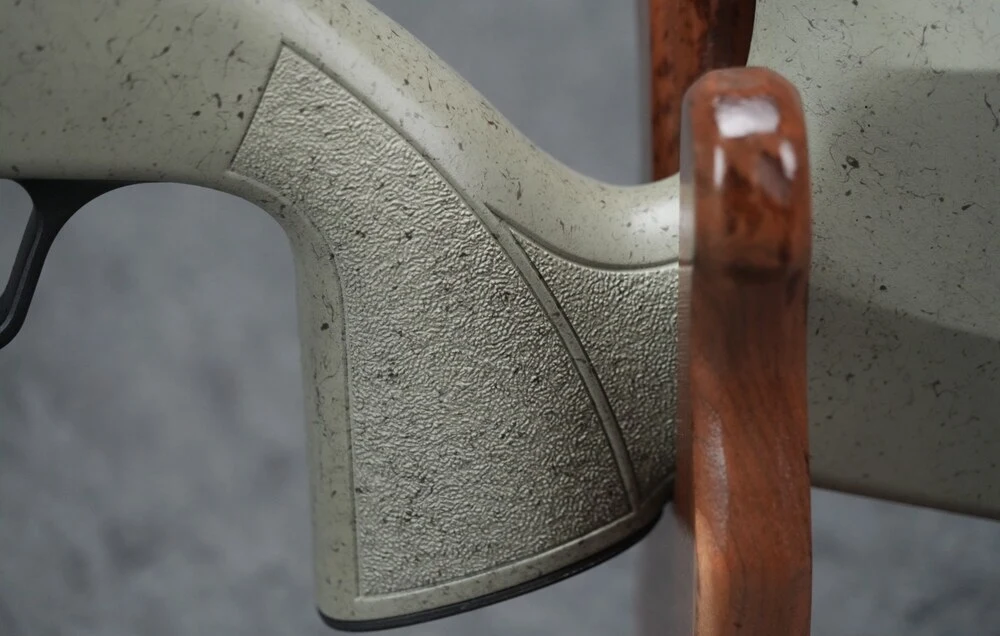
The grip on this rifle is almost vertical. That’s no big news – many other rimfire bolt actions feature one (take Savage 12B, for example). If someone feels a bit skeptical, please don’t. Like the Waypoint’s grip, this one also has palms swells and feels pretty comfortable. There is also plenty of space for your trigger hand, which is great for hands of all sizes. The vertical orientation puts your trigger finger at 90 degrees to the trigger, so your other fingers are free to push the grip into your shoulder. On either side of the grip, there is a mild stippling: not aggressive, but comfortable – perfect for such a low-recoil rifle as rimfire.
Barrel
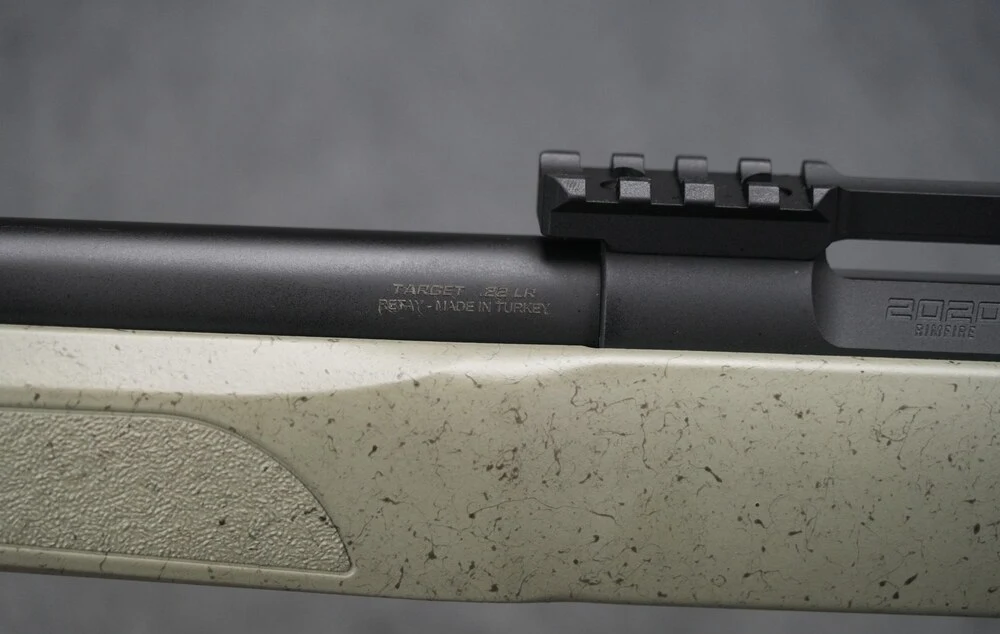
The Target Rifle Model 2020 Rimfire comes with an impressive 20-inch heavy-contour barrel with a straight taper. Now, one word at a time. Heavy-contoured means the barrel is heavier and thicker than a standard one. It’s good for stability and consistency during rapid fire, and since this model is considered to be “precision-oriented”, such a choice is pretty understandable. The straight taper means that the barrel is consistently thick throughout its length.
This design contributes to the rifle’s overall balance and accuracy. The matte-blued finish adds a touch of sleekness to its appearance while also bolstering its durability. The barrel is threaded 1/2×28, so you can suppress it without any issues. The twist rate is 1:16, which means the bullet will have enough time to make one full twist and start another one before leaving the barrel.
Action
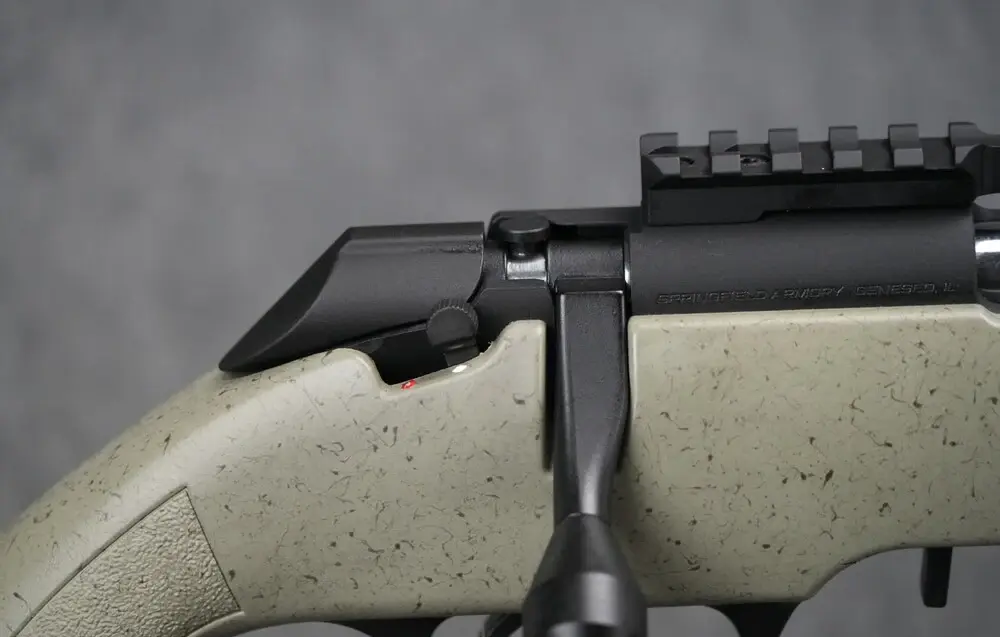
If you are more interested in the downsides of the rifle, you can skip this part -there are none to be found in the action. Apart from being a work of art in its own right, it also happens to be as right as rain. It operates smoothly, and by that I mean it never failed me during the testing, which was quite lengthy. Whether the action just tries to live up to its good looks or such a well-performing action simply can’t look bad, I don’t know. But I know I did not experience a single failure to feed, fire, extract or eject, and with that, I’m quite satisfied.
The bolt is hard-chromed, and while it certainly adds to the aesthetics, the main purpose of this is to increase its resistance to wear and corrosion. I didn’t need to clean the action or anything but rest assured hard chrome will make it a cakewalk even without dedicated tools. The bolt operates with a 60-degree lift, which I appreciate – it feels faster than regular 90 degrees. Since there are as many as two cocking cams, the pull also feels easier, and the truncated cone bolt handle helps with that as well. At the same time, it requires a shorter movement to operate which might require some habituation.
The action of the Model 2020 Rimfire is designed to accept a wide range of aftermarket 700 pattern triggers, and that’s a blessing undisguised. Here’s why.
 Trigger
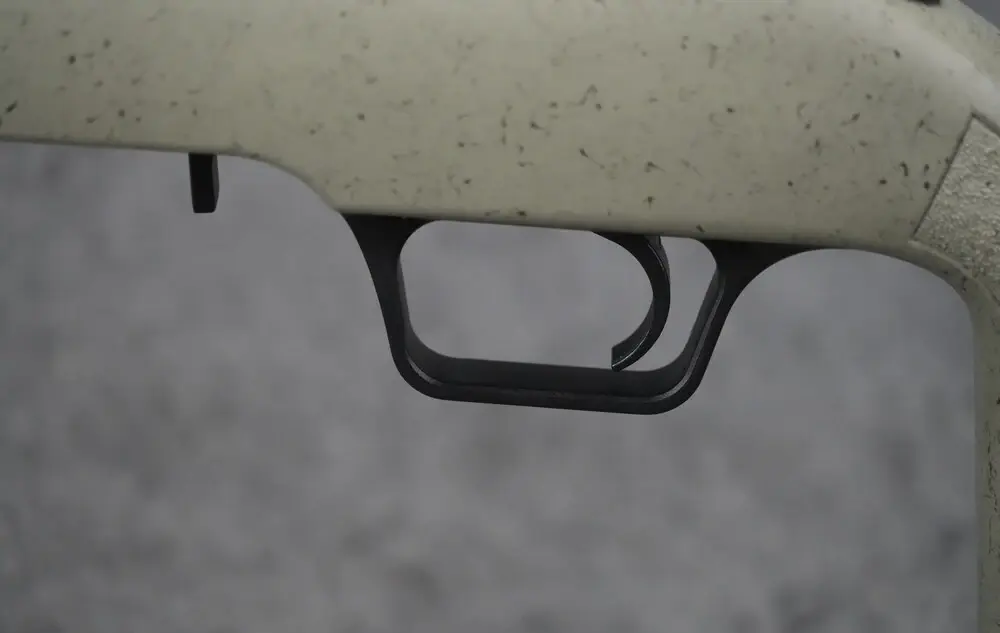
The Model 2020 Rimfire Target features a single-stage, user-adjustable Remington 700 pattern trigger. Now, the fact that it is a Remington 700-style trigger is great – there are many aftermarket options that are simply stunning. But there’s the rub – to me, the trigger feels too heavy for a rimfire. I see no harm in a 4.5-pound trigger on a centerfire gun, but with rimfire, you’d want as much control over every move as possible.
Sure, the trigger’s adjustable, but you can only make it slightly lighter or even heavier – from the factory set 4.5 pounds to 4 or 5.5 pounds. Of course, there is this potential benefit of increased safety – I bet it would be hard for such a trigger to discharge accidentally. But is it worth it? I’d rather make a one-time investment in a quality Remington 700-style trigger and use it wherever I can. But this one didn’t find any favor with me.
Magazines
The Model 2020 Rimfire Target uses Ruger 10/22 pattern rotary magazines, which I think is another great decision. Rotary mags and bolt-action make for a great match in my opinion. Truth be told, I didn’t try the rifle with any other mag – saw no reason to. I’m not the kind to mess with a gun just for the sake of it, and the magazine performed quite well. But I watched other reviews before writing this one and will warn everyone who wants to try a different Ruger 10/22 mag. This is a 10-round rifle with a 10-round magazine. It won’t take rotary magazines of greater capacities despite them being Ruger 10/22. If you want greater capacity, go with a regular box magazine.
Range Test
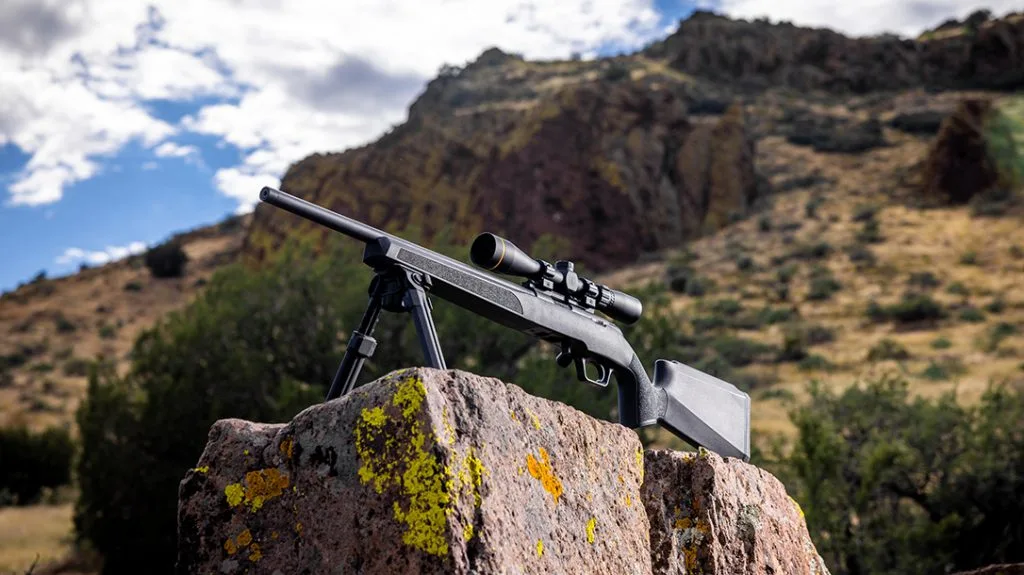
Springfield Armory claims its rifles shoot three-shot groups under 1” at 50 yards. I don’t know what came over them, I wouldn’t say it’s something worth bragging about. 50 yards is not that much, honestly, so it’s more like a standard rather than an exceptional feature. Was I able to meet that standard? Yes, more or less.
At the range, it was not as much about hitting the bullseye eye, but rather getting consistent grouping, preferably below 1”. I tried CCI Standard Velocity, the go-to round, I tried Federal Champion and Remington Thunderbolt.
I will say that I managed to get groups that didn’t go above the one-inch margin, but it took me some time. Which is fine in my opinion – rimfire rounds are pretty inconsistent when it comes to performance on different rifles. Rimfire guns are known to have almost tastes of their own, working fine with some rounds and throwing flyers around with the others.
Then, there is the acclimation that you need to do when changing the style of rounds. I saw some reviewers jump to conclusions right away after changing the ammo for a different brand and seeing their performance deteriorating. We don’t do this with centerfire rifles as a rule, but rimfire guns need to be acclimated. Doing so is as easy as one two three – just shoot 15 or 20 rounds. That’s it, you don’t need to be precise or anything, just let your rifle get used to the specifications of that particular type of ammo.
My worst group was “2 which was pretty sad since it was only 50 yards and one flier spoiled that. That was with Federal. My best group was about 0.6” with CCI left me quite happy. Most of the groups were within the 0.8-1.2-inch bracket, so technically speaking, Springfield Armory didn’t lie about their rifle’s precision capabilities. It’s not pinpoint accuracy for sure, but, c’mon, it’s a rimfire, most of us don’t get them to do competitive shooting. I would say it’s more than enough for plinking, and there is even some room for precise-ish shooting competitions with friends. But if you need something that can deliver pinpoint accuracy, I would recommend spending a tiny bit more on a Ruger Precision Rimfire. If you are a fan of wood stocks like me, then CZ 457 Lux would be an even better option.
Springfield Armory Model 2020 Rimfire Classic
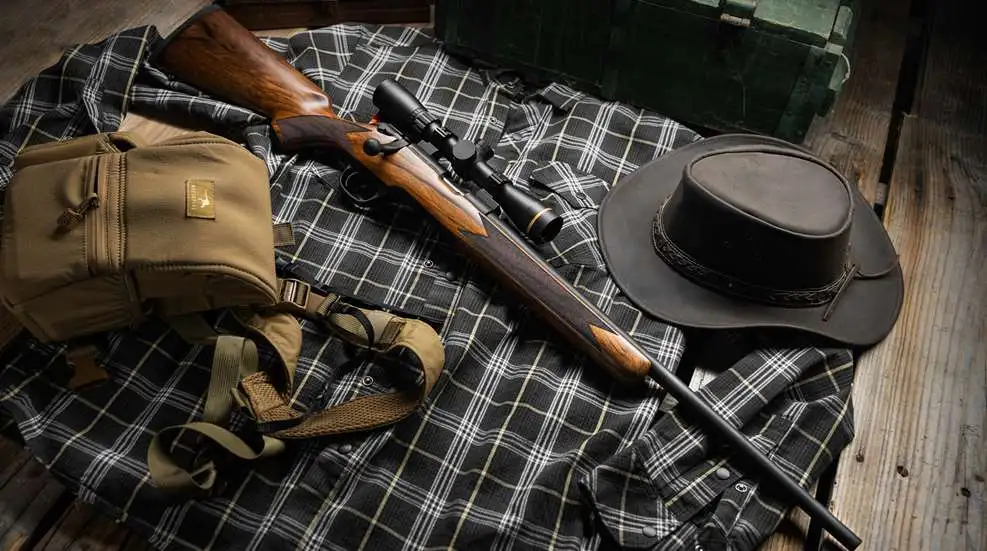
This review wouldn’t be complete without me mentioning my experience with the Classic variant of the Springfield Armory Model 2020 Rimfire rifle. My range friend lent me his Grade AA rifle and, man, it’s nothing short of a tactile rapture.
Starting with the star of the show, the Classic model boasts a traditional Turkey Walnut stock that lends it an undeniable touch of elegance and nostalgia. Grade AA is second to first, so the quality is spectacular. The Classic model also stays true to tradition with a more conventional grip style and has a round bolt handle.
In terms of barrel profile, the Classic model is equipped with a sporter contour barrel, known for its balance of weight and accuracy. However, it’s not threaded, so attaching muzzle devices wasn’t an option.
I must say I had a more enjoyable time shooting this rifle on my feet rather than the Target model. The latter is simply meant to be resting on a shooting bag, while the Classic model feels great in a standing stance.
There’s also a noticeable difference in weight between the two models. The Classic model tips the scales at 6 lbs., 3 ozs., making it lighter and more maneuverable. The Target model, with its reinforced stock and heavier barrel, weighs in at 7 lbs.12 oz.
In terms of accuracy, the Classic model was comparable to the Target one, though I had to try a bit harder to match the result. I guess the heavy-contour barrel does contribute to accuracy. The ammo was the same, I wasn’t able to get a 0.6-inch group, but it’s nothing I would be too worried about. Only wish I had more time to find the ammo it would like – that range friend of mine doesn’t shoot the rifle that much.
Conclusion
What’s the verdict on the Springfield Armory 2020 Rimfire Rifles? They are worth a shot. Most people will probably opt for the Target version – it’s cheaper and seems to be more precise than the Classic one, so there is no actual reason not to do that. Unless you are a sucker for a wooden stock like me. What I would change about both versions is the trigger – it just doesn’t do it for me. Rimfires need something lighter, I bet it would have been easier to land tighter groups with a different trigger. Fortunately, there are plenty of aftermarket trigger options, so should you be willing, you can get both in our sports store.
Check out other reviews by GritrSports team and our contributors:
FAQs
What are the two models of the Springfield Armory 2020 Rimfire?
The two models of the Springfield Armory 2020 Rimfire Rifles are the Target and the Classic.
How does the Target model of Springfield Armory 2020 Rimfire differ from the Classic model?
The Target model features a polymer stock and a heavy and threaded barrel suitable for precision shooting. The Classic model, on the other hand, has a wood stock and a sporter barrel contour, leaning towards traditional design and functionality.
Can I attach suppressors and muzzle devices to the Target model?
Yes, the Target model has a threaded barrel that allows for the attachment of suppressors and muzzle devices.
Are there stock variations available for the Classic model?
Yes, the Classic model offers four grades of Turkish Walnut stocks: Select Satin, Grade A, Grade AA, and Grade AAA. The higher the grade, the more detailed the figure and grain of the walnut.
What is the length and contour of the Target model’s barrel?
The Target model is fitted with a 20-inch heavy-contour barrel with a straight taper.
What type of trigger does the Model 2020 Rimfire Target have?
The Model 2020 Rimfire Target is equipped with a single-stage, adjustable Remington 700 pattern trigger with a trigger pull weight between 4 and 5.5 pounds.
What kind of magazines does the Model 2020 Rimfire Target use?
The Model 2020 Rimfire Target uses Ruger 10/22 pattern rotary magazines with a magazine capacity of no more than 10 rounds. You can also attach box magazines with higher capacity.
Source link: https://blog.gritrsports.com/springfield-armory-2020-rimfire-review/ by Timothy Chandler at blog.gritrsports.com
Predator Hunting
Top 5 Charles Daly Shotguns for Hunting, Sporting & Defense

The legality of stockless shotguns varies by jurisdiction. In the United States, many stockless shotguns, often classified as “pistol grip” shotguns, do not fall under the same regulatory requirements as traditional shotguns because they lack a shoulder stock. However, it’s essential to check local laws and regulations, as some states may impose restrictions or requirements related to firearm ownership, including stockless designs.
Source link: https://blog.gritrsports.com/best-charles-daly-shotguns/ by Gritr Sports at blog.gritrsports.com
Predator Hunting
Springfield Armory Pistols for EDC: Hellcat, XD, 1911 EMP [Review]

.elementor-widget-text-editor.elementor-drop-cap-view-stacked .elementor-drop-cap{background-color:#69727d;color:#fff}.elementor-widget-text-editor.elementor-drop-cap-view-framed .elementor-drop-cap{color:#69727d;border:3px solid;background-color:transparent}.elementor-widget-text-editor:not(.elementor-drop-cap-view-default) .elementor-drop-cap{margin-top:8px}.elementor-widget-text-editor:not(.elementor-drop-cap-view-default) .elementor-drop-cap-letter{width:1em;height:1em}.elementor-widget-text-editor .elementor-drop-cap{float:left;text-align:center;line-height:1;font-size:50px}.elementor-widget-text-editor .elementor-drop-cap-letter{display:inline-block}
Springfield Armory has consistently set the bar high with its innovative designs and reliable performance. In this post, we’re taking a closer look at three of Springfield Armory’s latest and greatest pistols for concealed carry: two compact XD pistols, the Hellcats, and the 1911 EMPs. Let’s get started.
.elementor-widget-image{text-align:center}.elementor-widget-image a{display:inline-block}.elementor-widget-image a img[src$=”.svg”]{width:48px}.elementor-widget-image img{vertical-align:middle;display:inline-block}
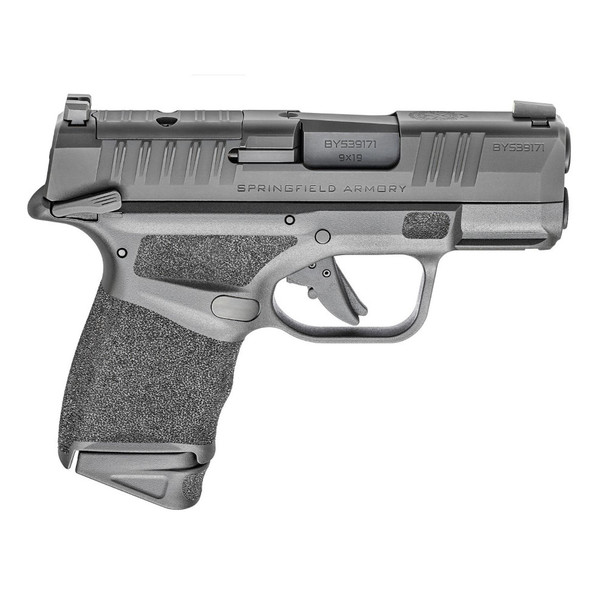

Springfield Armory XD Pistols
Springfield Armory XD Series
It all started back in 2001 with the original XD (eXtreme Duty), a polymer-frame, striker-fired handgun that was designed for folks looking for a dependable EDC pistol that is easy to use. The original XD was loved for its ergonomic grip angle, ambidextrous magazine release, and a host of safety features, including grip safety and trigger safety.
After the initial success, Springfield Armory expanded the lineup in 2008 with the XD-M series. The “M” stands for “Match,” and this line came loaded with features tailored for competitive shooters—a high-end trigger, interchangeable backstraps, and a match-grade barrel that made it super accurate. Around this time, they also launched the XD-S—a single-stack version aimed at the concealed carry crowd. Its slim design made it a hit for those wanting something compact but still powerful.
Next came the XD Mod.2, which brought improved ergonomics and a better grip texture to the table. The XD-E followed, offering a double-action/single-action (DA/SA) option with an exposed hammer and manual safety for extra control. Finally, the XD-S Mod.2, an upgraded version of the original XD-S, packed in new refinements in grip texture and a higher hand position for better control and reduced muzzle rise.
Springfield XD-S Mod.2 OSP Pistols
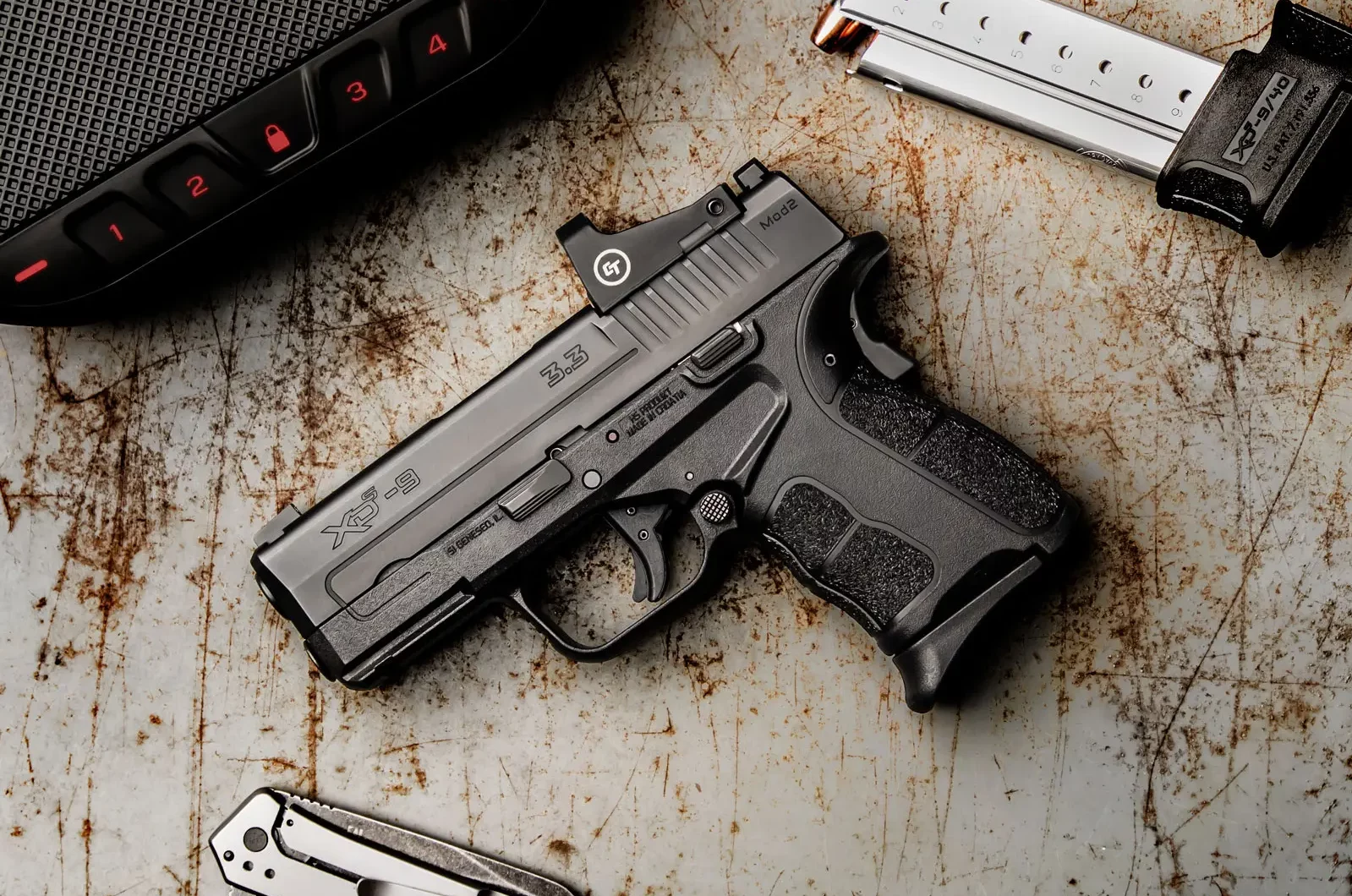
The 2020 introduction of the XD-S Mod.2 OSP brought optics-ready capability to the popular single-stack platform. The XD-S Mod.2 OSP is available in 9mm and .45 ACP calibers, with and without a preinstalled red dot sight (Crimson Trace). The anti-glare U-notch rear sight with a white dot front sight makes aiming easy even without optics. Ergonomics remain central, with a slim profile and comfortable grip enhanced by grip extension.
Springfield XD-M Elite Compact OSP Pistols
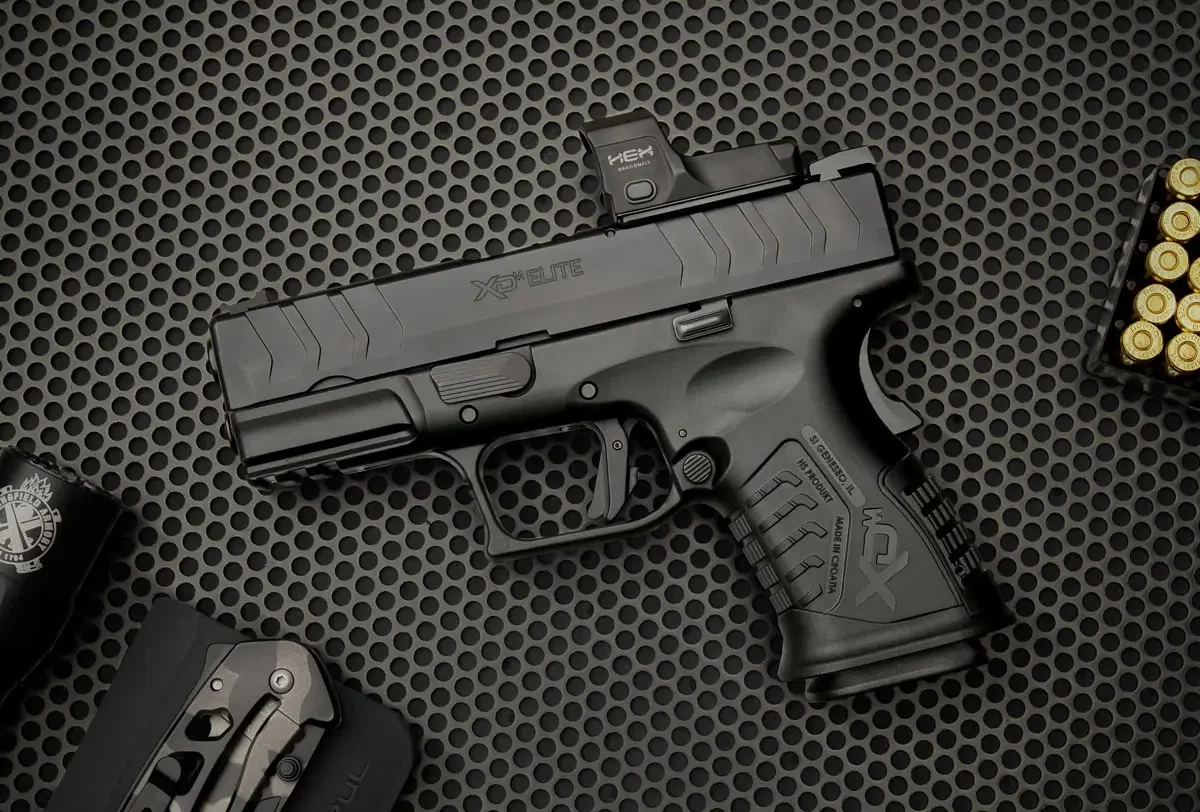
In 2021, Springfield Armory further expanded the lineup with the XD-M Elite Compact OSP. This series features 3.8″ and 4.5″ barrels and is chambered in 10mm, except for the California-compliant 9mm version. The 10mm chambering offers serious stopping power, although it does mean you’ll feel more recoil. The XD-M Elite Compact OSP retains its manageable size and adds a removable cover plate for easy optic integration. It also comes with a stellar META trigger system, ambidextrous controls, and improved slide serrations, making it versatile and user-friendly. The trigger is truly outstanding with a flat face, crisp break, and integral overtravel stop that makes the reset quick, speeding up follow-up shots. You can get this model with or without a HEX Dragonfly red dot sight.
Springfield XD-S vs XD-M: Which One Do You Need for Concealed Carry
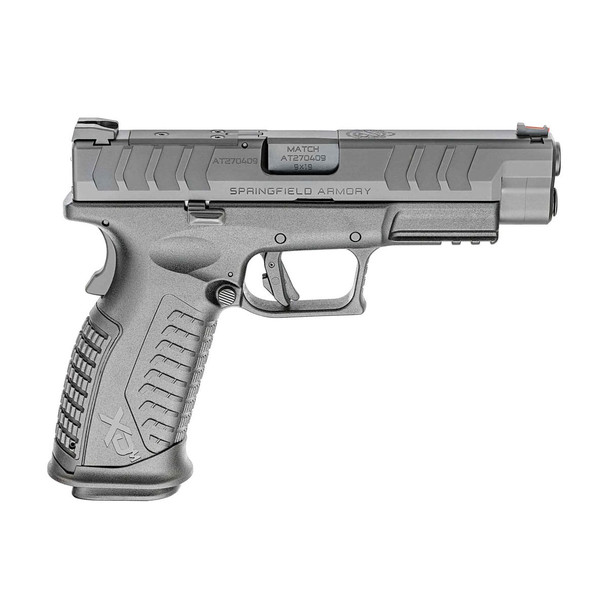
When it comes to choosing between the XD-S Mod.2 OSP and the XD-M Elite Compact OSP for everyday carry, each has its unique perks. The XD-S Mod.2 OSP is all about concealability with its slim and compact profile and lightweight design. On the flip side, the XD-M Elite Compact OSP offers more capacity—11 rounds compared to the 7 or 9 rounds in the XD-S Mod.2 OSP—and its 10mm chambering means more stopping power (and also more recoil). The META trigger system is a big win too.
If you’re wondering which one’s easier to shoot—it’s a tie. The XD-S is lighter and has a shorter sight radius, which means more recoil and a bit less accuracy for new shooters. The XD-M, with its longer barrel and better trigger, is likely to be more accurate but also packs a bigger kick with the 10mm chambering. In colder climates, may consider a larger XD-M Elite with a 4.5″ barrel for better handling during winter carry.
As for the similarities, both models are loaded with safety features, including a grip safety, drop safety, and a loaded chamber indicator, providing peace of mind for any gun owner.

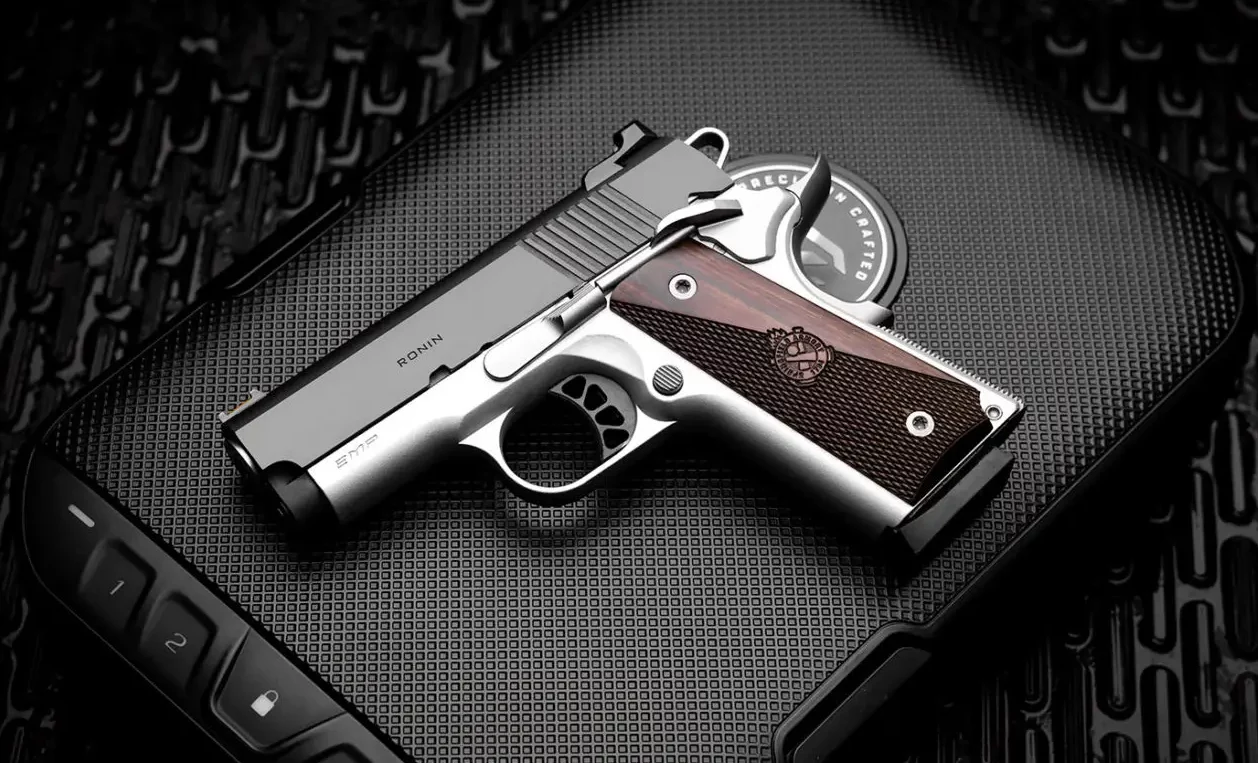
Springfield Armory Ronin 1911 EMP
Springfield EMP Series in a Nutshell
The Springfield Armory EMP (Enhanced Micro Pistol) series stands apart in the world of compact 1911 pistols. Unlike traditional 1911s, which use the .45 ACP cartridge, the EMP was designed to fit the smaller 9mm rounds. Springfield didn’t just shrink the slide and barrel; they resized 17 different parts, leading to a shorter slide, frame, extractor, firing pin, and more. This results in a handier 1911, a more compact pistol with a reduced grip radius, which is extremely concealable.
Ronin 1911 EMP: The Springfield 1911 Pistol for Concealed Carry
In 2021, Springfield Armory expanded its Ronin lineup by introducing the Ronin EMP pistols.
The whole Ronin series of Springfield 1911 pistols is distinguished by its blend of classic aesthetics and modern functionality. Its eye-catching two-tone finish and highly durable construction are what sets the Ronin apart from other Springfield 1911 pistols.
So, the Ronin 1911 EMP merges the classic looks and modern efficiency of the Ronin series with the compact EMP design. Available in two models—one with a 3-inch barrel and another with a 4-inch barrel—both are chambered in 9mm. The 3-inch model holds 9+1 rounds, while the 4-inch version holds 10+1.
Both versions feature a forged carbon steel slide, a lightweight aluminum frame with a durable Cerakote finish, and a precisely fitted stainless steel bull barrel. Other standout features include an extended beavertail grip safety, a fiber optic front sight paired with a tactical rack rear sight, and Crossed Cannon wood grips. Ergonomically, the Ronin EMP pistols offer enhanced comfort through their reduced grip radius and are generally designed for better control during shooting.
Practical Use and Everyday Carry
Both Ronin 1911 EMP 9mm pistols are designed for concealed carry and everyday defense. The only things that are different across the models are their barrel length and capacity, which influence several aspects:
Concealability: The 3-inch model, with its shorter slide and grip, is highly concealable, making it ideal for those who prioritize a low-profile carry. The 4-inch model, while slightly larger, offers a balanced mix of concealability and control.
Shootability: The longer sight radius and added weight of the 4-inch model provide better accuracy and reduced muzzle flip and can be more comfortable to handle for shooters with larger hands. The 3-inch model, though more compact, might be more challenging to shoot for less experienced users due to its smaller grip area and lighter frame.
Recoil Control: Both models manage recoil well due to their lighter 9mm chambering and heavier build compared to polymer pistols. The 4-inch version especially handles recoil better, allowing for quicker follow-up shots.
Firepower: With capacities of 9+1 or 10+1 rounds, these pistols pack serious firepower for their size.
In short, the Ronin 1911 EMP series by Springfield Armory offers outstanding carry options with its thoughtful design, exceptional ergonomics, and durable components. Whether you’re new to concealed carry or a seasoned pro, these pistols are a solid choice for everyday defense.

The post Springfield Armory Pistols for EDC: Hellcat, XD, 1911 EMP [Review] appeared first on Blog.GritrSports.com.
Source link: https://blog.gritrsports.com/springfield-armory-pistols-for-cc/ by Maria Mamchits at blog.gritrsports.com
Predator Hunting
The Evolution of the Beretta 9mm Pistols: 92, APX, PX4

Modern Variants of the 92FS and M9
Since the 92FS was introduced, Beretta has rolled out tons of different models. Some were specifically made for law enforcement, like the 92G for the French police, which skips the manual safety and uses a decocker lever instead. Even though the original 92G was discontinued, its slide design lives on in models like the M9A4.
Then there’s the 92D, a model that gets rid of both the safety and decocker lever, relying solely on a double-action trigger. In the ’90s, Beretta also introduced the 96 series chambered in .40 S&W to keep up with law enforcement trends.
Brigadier slide
In 1993, the Brigadier-style slide came out with reinforced locking lugs for added durability and a unique “hump” in the slide’s contour. Although the extended lifespan due to this design is up for debate, many users have noted it reduces recoil and muzzle rise. Because of this, the Brigadier slide is popular in 92 variants used in action pistol competitions.
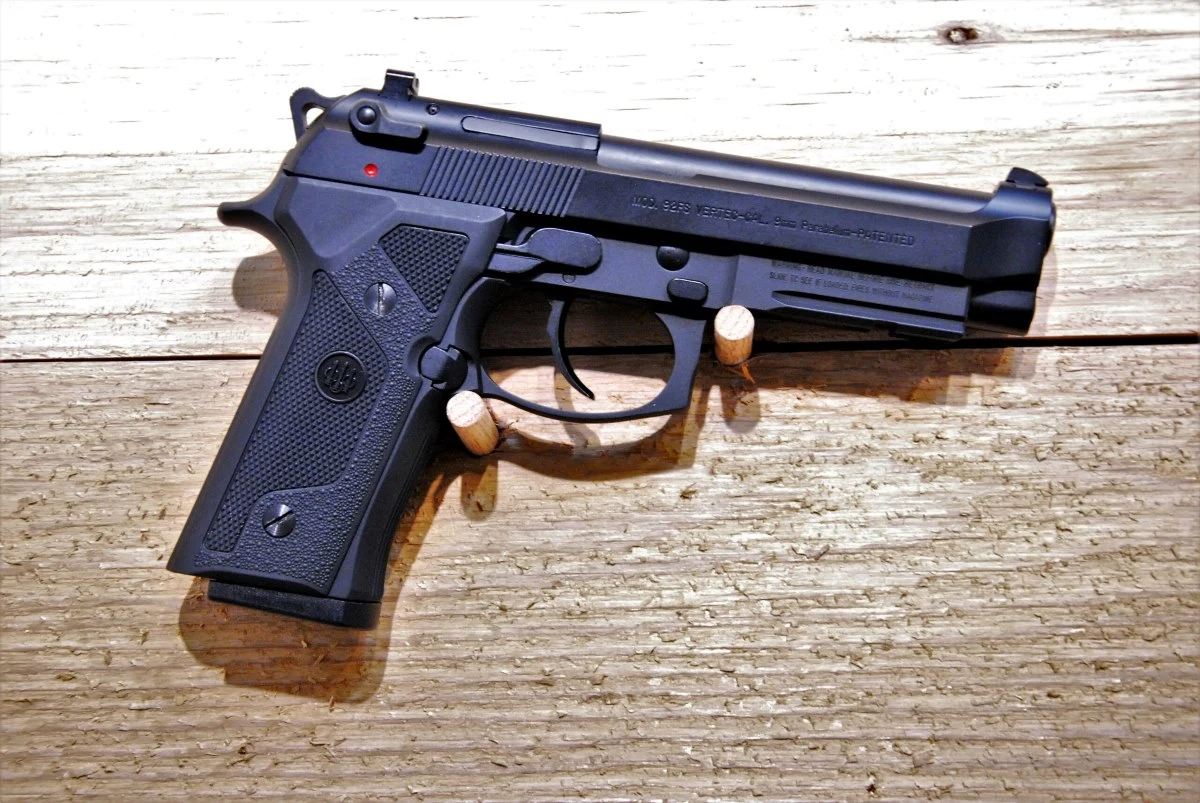
Come early 2000s, Beretta introduced the 92 Vertec. This model was designed for law enforcement and shooters with smaller hands, featuring a slim backstrap and a shorter reach trigger. It also had an accessory rail, beveled magazine well, and interchangeable front sights. Plus, it ditched the traditional barrel protrusion by shortening the barrel to 4.7 inches but kept the slide the same length.
Beretta 92 Vertec
Many modern 92 series variants blend features from both the Brigadier and Vertec models. Examples include the 92FS Brigadier, 92X, M9A3, and M9A4.
The Beretta 92X, introduced in 2019, standardizes the Vertec platform and adds the “Xtreme-S” trigger system, which cuts trigger reset by 40% and offers adjustability for pre-travel (in SAO models) and overtravel. Other highlights include a 3-slot Picatinny rail, a slimmer vertical grip, removable wrap-around grips to switch between Vertec-style and the classic M9 feel, fully removable high-visibility sights, and a universal slide allowing conversion from decocker-safety to decocker-only mode.
The series also includes the 92X Centurion (18 rd), 92X RDO Compact (15 rd) pistols, 92X Performance Carry Optic featuring an optic cut for USPSA competitors, and the lightweight 92X Performance Defensive for IDPA competitions.
New additions to the 92 family are the 92XI and 92GTS pistols. The 92XI is an SAO pistol with a 1911-style frame-mounted safety and comes in a base model, a Tactical model with a threaded barrel and DLC-coated trigger components, and a flashy Squalo edition. Meanwhile, the 92GTS is DA/SA with a twin sear and a decocker-only configuration.
Now, let’s get back to the M9. Around the mid-2000s, the US military requested some tweaks to the original design. Beretta responded with the M9A1, which borrowed features from the 92G-SD like a railed frame, standard 92 grip contour, beveled mag well, and textured grip while keeping the original M9 slide mostly the same.
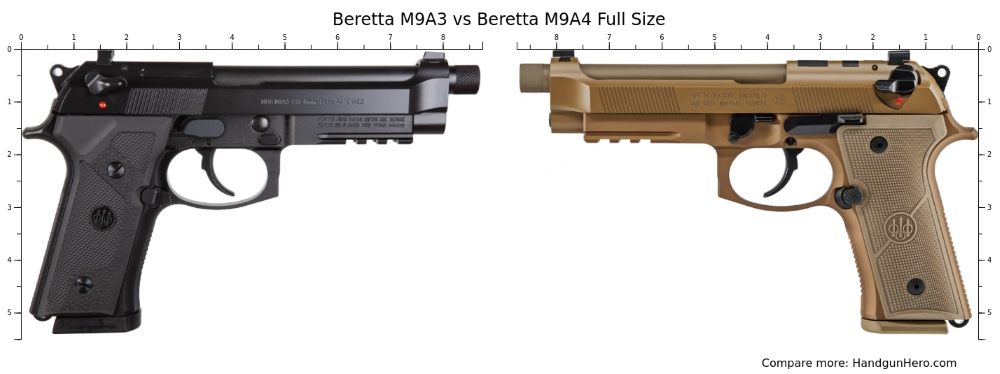
Almost a decade later, Beretta rolled out the M9A3, featuring a replaceable front sight, a railed frame, and a Vertec-style backstrap with an aggressive grip texture. It also includes a wraparound rubber grip to replicate the feel of the standard M9A1 backstrap. The standout feature of the M9A3 is a redesigned slide that allows the gun to switch between FS and G configurations using a conversion kit, something that previously required an expensive and permanent modification by a gunsmith.
The latest iteration, the Beretta M9A4, boasts a red-dot optic compatible slide, dovetailed tritium night sights, an enhanced short-reset Xtreme Trigger System, 18-round sand-resistant magazines, and textured Vertec-style thin grips.
Source link: https://blog.gritrsports.com/beretta-9mm-pistols-92-apx-px4/ by Gritr Sports at blog.gritrsports.com