
Predator Hunting
Hunting Tactics 101: The Do’s and Don’ts for a Successful Hunt

Last Updated on

Hunting, a time-honored tradition and pastime, is as much about strategy as it is about skill. Your marksmanship won’t have any chances to shine if you never manage to come close enough to land a shot. In the same way, knowing Hunting 101 doesn’t automatically mean you possess the skills needed to succeed. It’s a combination of both that marks the true hunter. We cannot teach you skills, but we can give you the information you need about a particular hunting method. After all, understanding how hunting tactics work can significantly increase your chances of success. This article will explore various popular hunting tactics, as well as do’s and don’ts for each of them.
Table of Contents
Understanding Hunting Tactics
Spot and Stalk Hunting
Still Hunting
Hunting from a Stand or Blind
Drive Hunting
Conclusion
FAQs
Understanding Hunting Tactics
Hunting tactics are strategic techniques employed by hunters to outsmart their prey, something that allows you to actually get close enough to even try to get it down. These techniques are an integral part of the hunting experience, influencing such factors as approach, timing, positioning and even hunting gear. Hunters have been accumulating their experience for thousands of years, passing on the knowledge for the next generation to adopt and improve. The methods we have now are the result of millennia of trial-and-erroring on the part of our ancestors. Here they are.
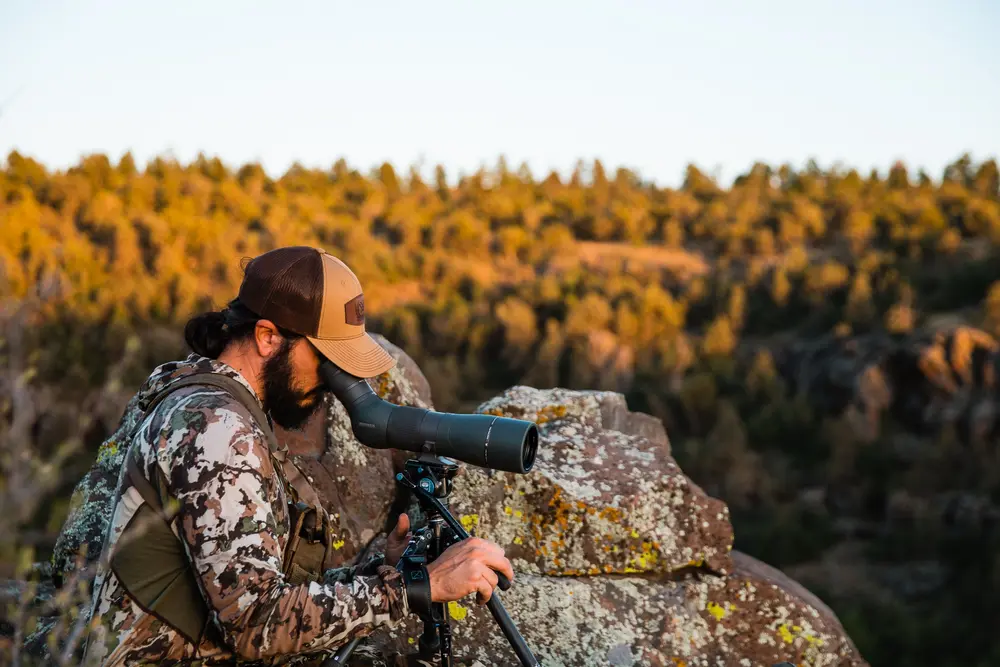
Spot and Stalk Hunting
Spot and stalk hunting is a method that requires both strategy and patience, often used to target animals that are alert to their surroundings or difficult to approach. This hunting tactic involves actively seeking (though not necessarily through walking) and stalking prey in their natural habitat. It’s one of the most popular hunting methods on par with blind or stand hunting. This method is particularly popular with bow hunters, but those using rifles also partake in this type of hunting.
The Main Aspects of Spot and Stalk Hunting
Observation
The first step in spot and stalk hunting is careful observation. You need to first find your prey to start stalking it. There are a number of ways to do so. Hunters that choose this method usually scan their surroundings for signs of animal activity, such as tracks or droppings or look for game in its feeding areas. The main thing about this method is that stalking happens only after spotting, which means you don’t need to walk miles in search of your target. Finding a good vantage point proves to be more helpful than traversing miles on foot. After all, with a spotting scope in your service, you’ll cover more area with your eyes than on your feet.
Spotting
After having identified or spotted a potential target, hunters use binoculars or spotting scopes to get a closer look. This process helps assess the animal’s body language, its size and exact location, which is crucial for planning the approach and determining the feasibility of a successful stalk. It is also at this moment that you should plan your route towards the target. It’s easy to lose sight of your destination once you leave your vantage point, so make sure to first find some landmarks you can rely on during your trip.
Stalking
Once a target has been identified and assessed and the route has been made, it’s time for the hunter to start stalking the animal. This phase involves moving towards the animal, using natural cover like trees or rocks to remain concealed. Use whatever comes your way to avoid being noticed, be it land mass or vegetation. The goal is to get within effective shooting range without alerting the prey. Some hunters might suggest being slow and stealthy right away, but that’s not necessarily the best choice. After all, the animal didn’t give you their word they would wait. So, you can start at a rapid pace to catch up to the game as soon as possible and after having closed some distance switch to a stealth mode.
Stealth and Patience
Stealth and patience are key elements of spot and stalk hunting once you get within the earshot of your prey. Hunters must move silently and avoid any sudden movements that could startle the animal. You should pay attention to a dozen little things: wind direction, cloud movement, the level of ambient noise – all to make sure the animal won’t spot you until it’s too late. Crawling or crouching will be your best companions in maintaining a low profile and minimizing visibility.
Shot Placement
After getting within comfortable shooting range, hunters need to select the appropriate shot placement to ensure a clean and ethical kill. This is yet another test of skill since you need to have a good command of animal anatomy to identify the best place for a shot and be skillful with a gun to land this shot. At this point, it’s all-in: you either hit the bull in the eye, or you don’t and let it get away.
Do’s:
🟢Use binoculars or spotting scopes to spot and assess the target animal from a distance.
🟢Study the behavior and habits of the target animal to anticipate its movements.
🟢Use natural cover and terrain features to remain concealed during the stalk.
🟢Practice stealth and move slowly to avoid detection once you come closer.
🟢Practice shooting from various positions and angles to be prepared for different scenarios.
Don’ts:
🔴Avoid rushing or making sudden movements that could startle the animal.
🔴Don’t neglect wind direction and scent control, as animals have a keen sense of smell.
🔴Don’t take shots that are beyond your effective shooting range, risking wounding rather than a clean kill.
🔴Always follow safety precautions, such as wearing appropriate hunting gear and using a safety harness when hunting from elevated positions.
🔴Never trespass or hunt in restricted areas without proper permission or permits.
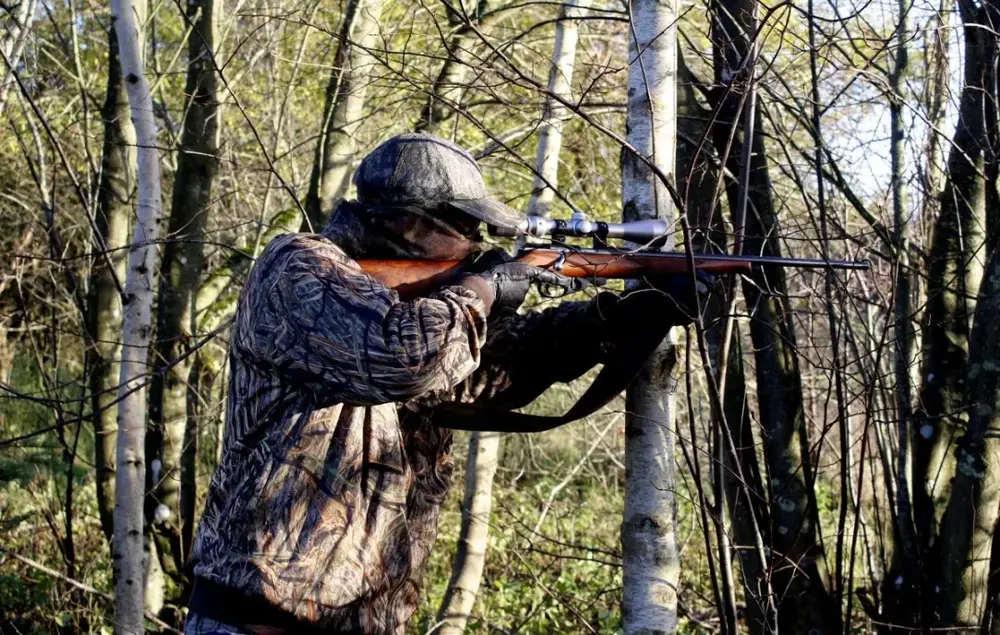
Still Hunting
Still hunting, despite its somewhat misleading name, is an active and highly strategic form of hunting. This method requires hunters to move slowly and stealthily through the animal’s habitat, making careful observations as they go. It shares many similarities with spot and stalking and they sometimes are even merged into one hunting method. But those are two different hunting tactics, at least when it comes to the beginning.
The Main Aspects of Still Hunting
Movement
In still hunting, movement is a delicate art. Hunters must move with purpose, taking careful steps to blend seamlessly with the environment, becoming a part of the landscape rather than an intruder. This is essential because in still hunting, you venture into the animal’s habitat right away, hoping to spot an animal rather than spotting it from afar and only then coming for it.
Stealth
Stealth is critical when still hunting. Hunters should use natural cover like trees, bushes, or rocks to hide their presence. It’s important to minimize unnecessary movements and avoid drawing attention to yourself. Remain in the shadows to further decrease your chances of being spotted. Remember that wind is your ally: the rustling of the leaves conceals the sound of steps better than anything else.
Observation
In observation lies another difference between still hunting and spot and stalk hunting. It never hurt anyone to stay alert during hunting, but that’s especially true for still hunters. The thing is, you venture into the animals’ domain hoping to spot them before they spot you. It’s no easy feat. Whereas spot-and-stalkers only start moving towards their target after having identified it, still hunters have all chances to remain in the dark about animals’ presence until they become too close not to spook the game. Constantly scanning your surroundings is of utmost importance. The success of your hunt depends on your ability to do so.
Patience and Endurance
Patience is perhaps the most important aspect of all the hunting tactics, regardless of which one you choose. But it’s one thing to spend hours in one spot, waiting for the right opportunity to make your move, and absolutely another to walk for hours in search of game. Maintaining focus during such periods is particularly hard, that’s why still hunting is not as popular as other hunting methods. You need to possess extraordinary endurance to succeed.
The general rule of stalking remains the same, only that you may spot an animal from a much closer distance and thus should always remain stealthy and careful. The host placement rules are also the same.
Do’s:
🟢Always move slowly and quietly, blending in with your surroundings.
🟢Stay alert and observe your environment for signs of animal activity.
🟢Use natural cover to stay hidden from potential prey.
🟢Exercise patience and be consistent in your sneaking.
🟢Carefully assess your shot selection, considering distance, angle, and potential obstacles.
Don’ts:
🔴Avoid making sudden or loud noises that could give away your presence.
🔴Do not move too quickly or make unnecessary movements.
🔴Avoid direct eye contact with animals – many species perceive this as a threat.
🔴Do not rush your shot – take the time to ensure a clean and ethical kill.
🔴Never compromise safety – always prioritize your well-being and that of others in the vicinity.
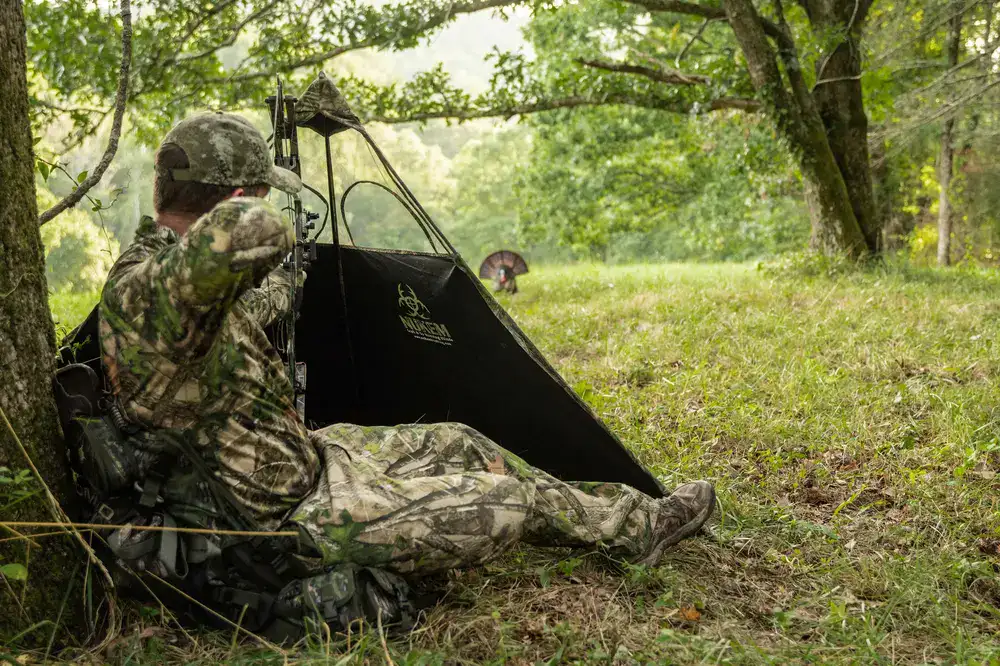
Hunting from a Stand or Blind
If you are not a fan of walking, then this hunting tactic will certainly float your boat. Hunting from a stand or blind is one of those tried-and-true hunting tactics that offer a unique set of advantages over traditional hunting methods. Whether you choose a treestand or a ground blind, this method of hunting allows for improved visibility, increased shooting range, and superior concealment – all while not making you spend hours traversing the wilderness.
The Main Aspects of Hunting from a Stand or Blind
Choosing a Location
The first step in this process is selecting an ideal location for your stand or blind. This involves studying the behavior and, most importantly, movement patterns of the target species. Look for signs of animal activity, such as game trails, feeding areas and water sources to make sure you aren’t just sitting in the middle of the wilderness where no animal dares to tread. Ideally, the location should provide a clear view of these areas but also have enough natural cover to conceal your presence.
Setting Up the Stand or Blind
Once a location has been chosen, the next step is setting up the stand or blind. For treestand hunting, find a sturdy tree that can support your weight and the stand. The stand should be securely attached to the tree, with safety harnesses used at all times during installation and use. Don’t take more than you need while using the three stands – the lighter you are, the safer it is.
For ground blinds, look for a spot that provides a clear shooting lane while blending into the surrounding environment. The blind should be camouflaged and positioned in a way that doesn’t obstruct the view or alert the animals to your presence.
Concealment and Camouflage
Regardless of whether you’re using a stand or blind, effective concealment is crucial. Choose hunting clothing with camouflage patterns and materials that match the surrounding vegetation. Additionally, scent control measures should be taken to minimize your odor and prevent detection by the animals. You don’t really have a choice where to stand regarding the wind, so you should mask your scent with other means.
Patience and Stillness
It comes as no surprise that hunting from a stand or blind requires patience and stillness. We’ve mentioned patience more than once, but you need a different kind of patience when sitting still. You may need to wait for extended periods for the target animals to come into range and are not recommended to move too much. Any movement or noise can alert the animals, so remain as still and quiet as possible for as long as you can to increase your chances of a successful hunt. If you did a good job of choosing the location, the animals won’t be long in coming.
Shooting Angles and Visibility
Since you get the unique opportunity to choose the location and shooting angle yourself, you should make the most out of it. Your setup should allow for optimum shooting angles and visibility. In a treestand, the elevated position offers a wider field of view and shooting angles. However, ensure you’re comfortable with shooting downward to avoid trajectory issues. Ground blinds may limit visibility due to their enclosed nature, so shooting apertures must be carefully positioned for clear sightlines.
Do’s:
🟢Choose a sturdy and secure treestand that can safely support your weight.
🟢Choose a ground blind that blends in well with the surrounding terrain.
🟢Practice setting up and using your chosen platform before the actual hunt to ensure the setup won’t be a problem during the actual hunt.
🟢Always wear a safety harness when using a treestand to prevent potential falls and accidents.
🟢Position your stand or blind in an area known for high game activity, preferably near food sources or game trails.
🟢Exercise patience and stay quiet while in your stand or blind to avoid alerting nearby animals.
🟢Wear camouflage clothing and use scent control products to enhance your concealment.
Don’ts:
🔴Avoid exceeding the weight limit of your treestand or compromising its stability by overloading it with gear.
🔴Don’t neglect proper tree selection and inspection when using a treestand. The tree should be healthy and capable of supporting the stand.
🔴Refrain from making sudden movements or creating unnecessary noise that could startle game.
🔴Never leave your stand or blind unattended for extended periods as it may attract unwanted attention or even be stolen.
🔴Always check local hunting regulations regarding the use of treestands or ground blinds in your chosen hunting area.
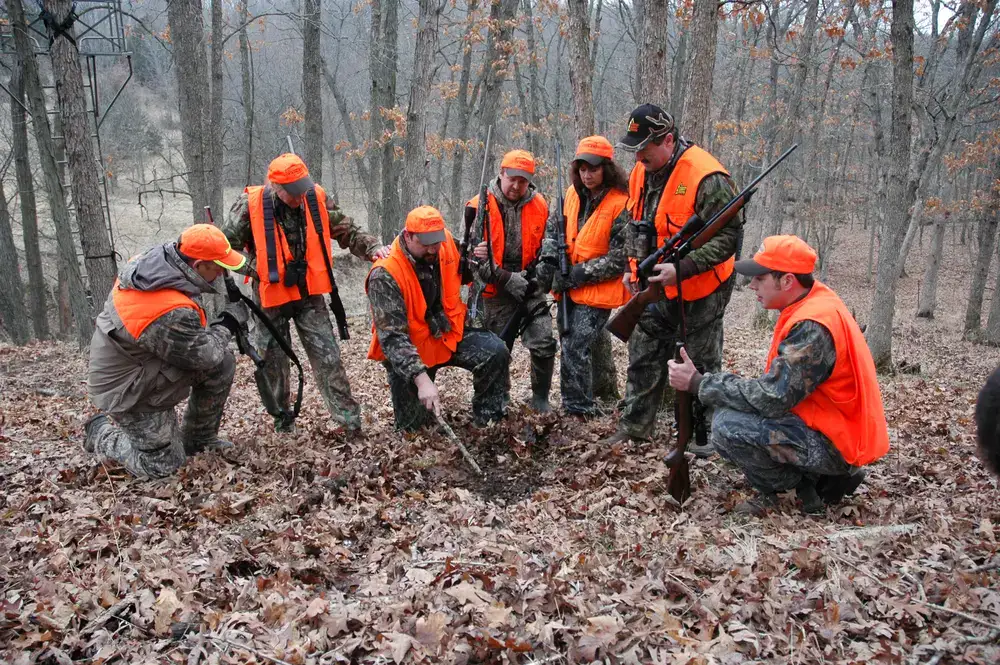
Drive Hunting
Finally, we have drive hunting, probably one of the oldest hunting tactics in existence. It is a communal hunting method often employed for its efficiency and effectiveness. This strategy involves a group of hunters working together to drive game into a confined area, where other hunters remain ready to intercept it. It has been used since the time of mammoth hunting and hasn’t gotten old yet.
The Main Aspects of Drive Hunting
Teamwork
Drive hunting relies heavily on teamwork. It’s the main difference between this method and all the others we’ve covered so far. Hunters typically divide into drivers and shooters. Drivers move through the terrain, pushing game towards shooters who are strategically positioned to take the shot.
Planning and Coordination
Successful drive hunting requires careful planning and coordination. As you can, coordinating that number of people is not particularly easy, especially given they will be somewhat scattered. In addition to understanding the terrain and animal behavior, hunters need means of clear communication amongst themselves to drive the game in the desired direction.
Knowledge of Terrain
Understanding the landscape is crucial in drive hunting. It’s vital to use both natural features such as rivers and cliffs and man-made structures like fences to direct animals towards a designated area. Your ability to take advantage of the local landscape can bring you the trophy the same way as the inability to read terrain can leave you bereft of any reward.
Understanding Animal Behavior
Knowing how your target species reacts under pressure is pivotal for all the hunting tactics, but especially so for drive hunting. The animal will feel threatened and most likely will dart off from you. But it might as well dart right towards you, and in a direct confrontation with not a second to react, your chances of getting injured might be high. As such, you need to always be prepared for both scenarios. And act accordingly.
Do’s:
🟢Establish clear communication and coordination among all participating hunters to prevent accidents.
🟢Designate safe shooting zones and ensure all hunters are aware of their locations.
🟢Be aware of the positions of fellow hunters and maintain a safe distance between them.
🟢Understand the terrain and use it to your advantage.
🟢Study the behavior of the target species to predict their movements.
🟢Equip yourself with appropriate gear for safety and efficiency.
🟢Respect local hunting regulations and ensure you have the necessary permits.
Don’ts:
🔴Avoid shooting towards other hunters or populated areas.
🔴Don’t rush the drive; slow and steady movement is more effective.
🔴Avoid unnecessary noise that might alert the game prematurely.
🔴Do not disregard safety measures, both for yourself and the team.
🔴Never hunt without proper permission on private land.
Conclusion
As you can see, hunting is a complex sport, with each strategy requiring its own set of skills and insights. By understanding the peculiarities of different hunting tactics and correctly applying them, you can significantly enhance your chances of success. Remember, the do’s and don’ts mentioned above are not just recommendations, but guidelines that serve as a beaten path to a safe and successful hunt.
Check out our other article on hunting and hunting-related equipment:
FAQs
What are some effective hunting tactics for different types of game?
Different game species require different hunting tactics. For instance, hunting from a hide or blind is often effective for deer, while stalking might be better suited for hunting elk. Experienced hunters can tailor their strategies based on the game, terrain, and weather conditions.
What is still-hunting and how is it done?
Still-hunting combines the pleasure of traversing the woods with the discipline of being on a hunt. It involves moving slowly and quietly in the animal’s habitat, stopping frequently to listen and observe, and using stealth to get close to game.
What is drive hunting and how does it work?
Drive hunting involves a group of hunters where some act as drivers, moving in a line through an area to drive game towards other hunters called standers. It requires well-oiled teamwork and good communication between the parties.
What are some safety tips for hunting from a tree stand?
Always wear a safety harness when climbing or sitting in a tree stand. Check your stand regularly for any signs of wear or damage. Never climb with your gear – use a haul line to bring up your equipment after you are secured in the stand.
Source link: https://blog.gritrsports.com/hunting-tactics-101/ by Timothy Chandler at blog.gritrsports.com
Predator Hunting
Top 5 Charles Daly Shotguns for Hunting, Sporting & Defense

The legality of stockless shotguns varies by jurisdiction. In the United States, many stockless shotguns, often classified as “pistol grip” shotguns, do not fall under the same regulatory requirements as traditional shotguns because they lack a shoulder stock. However, it’s essential to check local laws and regulations, as some states may impose restrictions or requirements related to firearm ownership, including stockless designs.
Source link: https://blog.gritrsports.com/best-charles-daly-shotguns/ by Gritr Sports at blog.gritrsports.com
Predator Hunting
Springfield Armory Pistols for EDC: Hellcat, XD, 1911 EMP [Review]

.elementor-widget-text-editor.elementor-drop-cap-view-stacked .elementor-drop-cap{background-color:#69727d;color:#fff}.elementor-widget-text-editor.elementor-drop-cap-view-framed .elementor-drop-cap{color:#69727d;border:3px solid;background-color:transparent}.elementor-widget-text-editor:not(.elementor-drop-cap-view-default) .elementor-drop-cap{margin-top:8px}.elementor-widget-text-editor:not(.elementor-drop-cap-view-default) .elementor-drop-cap-letter{width:1em;height:1em}.elementor-widget-text-editor .elementor-drop-cap{float:left;text-align:center;line-height:1;font-size:50px}.elementor-widget-text-editor .elementor-drop-cap-letter{display:inline-block}
Springfield Armory has consistently set the bar high with its innovative designs and reliable performance. In this post, we’re taking a closer look at three of Springfield Armory’s latest and greatest pistols for concealed carry: two compact XD pistols, the Hellcats, and the 1911 EMPs. Let’s get started.
.elementor-widget-image{text-align:center}.elementor-widget-image a{display:inline-block}.elementor-widget-image a img[src$=”.svg”]{width:48px}.elementor-widget-image img{vertical-align:middle;display:inline-block}
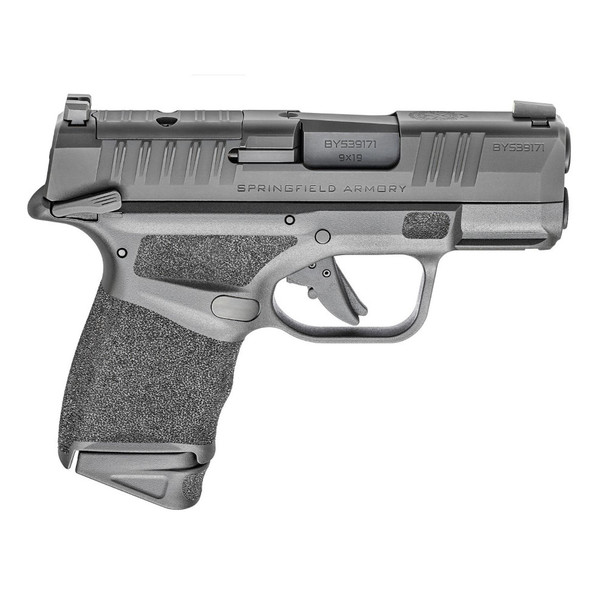

Springfield Armory XD Pistols
Springfield Armory XD Series
It all started back in 2001 with the original XD (eXtreme Duty), a polymer-frame, striker-fired handgun that was designed for folks looking for a dependable EDC pistol that is easy to use. The original XD was loved for its ergonomic grip angle, ambidextrous magazine release, and a host of safety features, including grip safety and trigger safety.
After the initial success, Springfield Armory expanded the lineup in 2008 with the XD-M series. The “M” stands for “Match,” and this line came loaded with features tailored for competitive shooters—a high-end trigger, interchangeable backstraps, and a match-grade barrel that made it super accurate. Around this time, they also launched the XD-S—a single-stack version aimed at the concealed carry crowd. Its slim design made it a hit for those wanting something compact but still powerful.
Next came the XD Mod.2, which brought improved ergonomics and a better grip texture to the table. The XD-E followed, offering a double-action/single-action (DA/SA) option with an exposed hammer and manual safety for extra control. Finally, the XD-S Mod.2, an upgraded version of the original XD-S, packed in new refinements in grip texture and a higher hand position for better control and reduced muzzle rise.
Springfield XD-S Mod.2 OSP Pistols
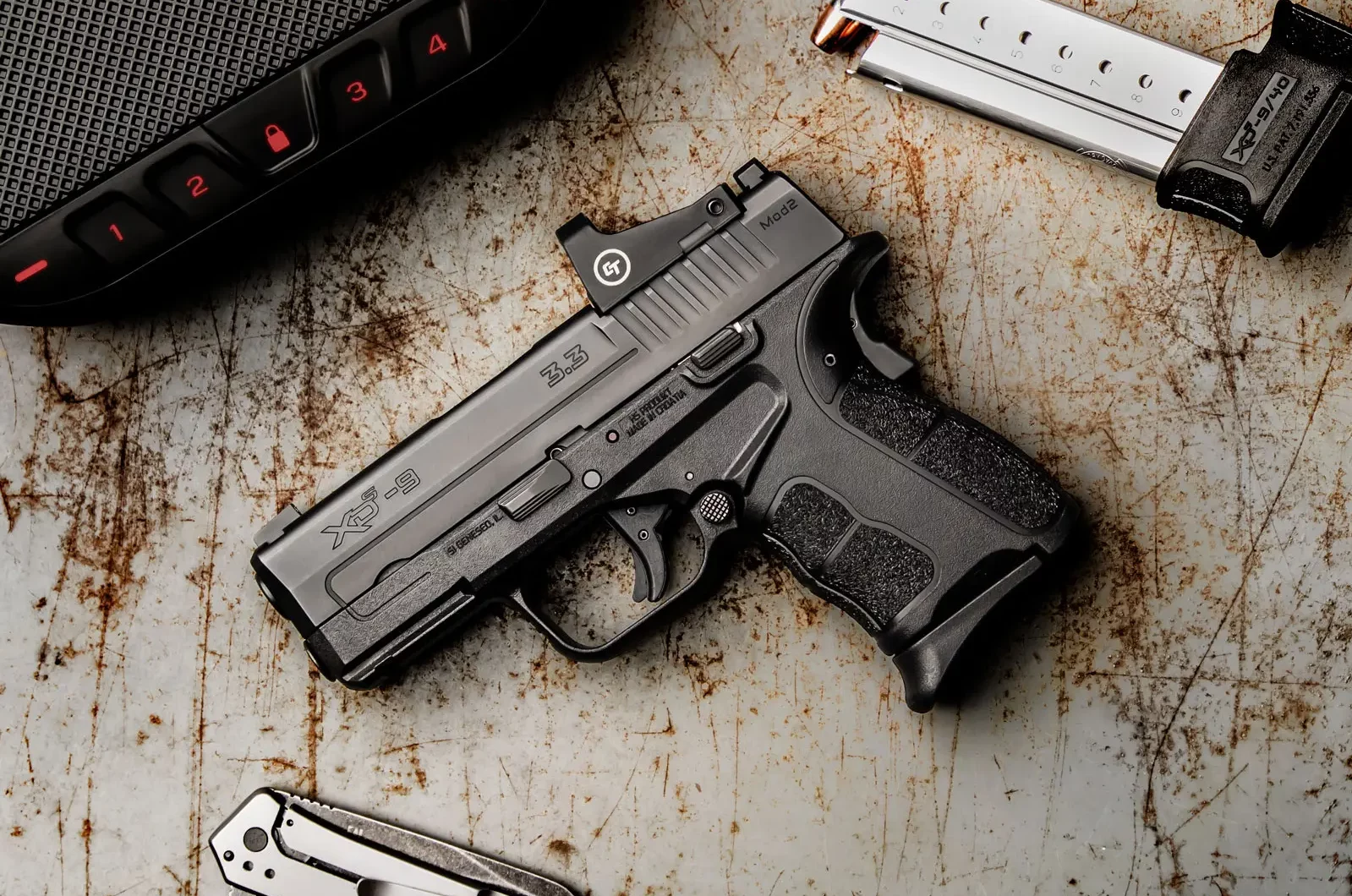
The 2020 introduction of the XD-S Mod.2 OSP brought optics-ready capability to the popular single-stack platform. The XD-S Mod.2 OSP is available in 9mm and .45 ACP calibers, with and without a preinstalled red dot sight (Crimson Trace). The anti-glare U-notch rear sight with a white dot front sight makes aiming easy even without optics. Ergonomics remain central, with a slim profile and comfortable grip enhanced by grip extension.
Springfield XD-M Elite Compact OSP Pistols
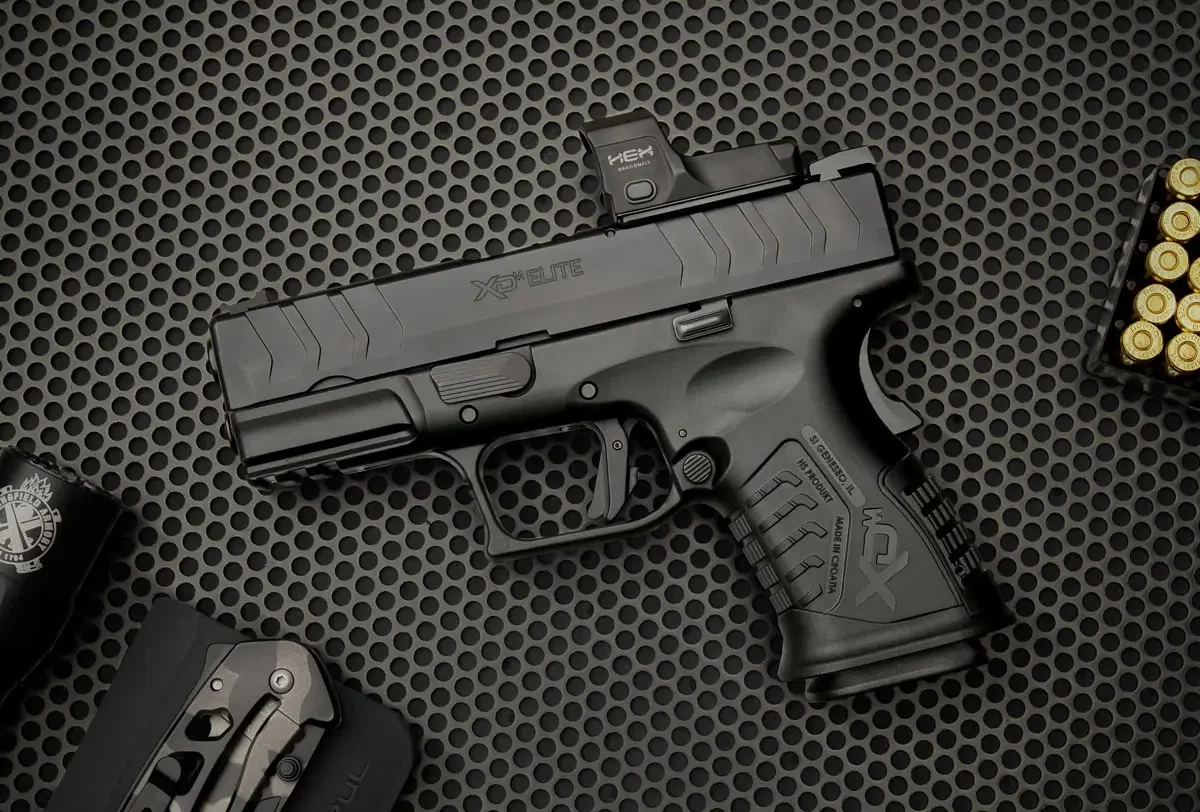
In 2021, Springfield Armory further expanded the lineup with the XD-M Elite Compact OSP. This series features 3.8″ and 4.5″ barrels and is chambered in 10mm, except for the California-compliant 9mm version. The 10mm chambering offers serious stopping power, although it does mean you’ll feel more recoil. The XD-M Elite Compact OSP retains its manageable size and adds a removable cover plate for easy optic integration. It also comes with a stellar META trigger system, ambidextrous controls, and improved slide serrations, making it versatile and user-friendly. The trigger is truly outstanding with a flat face, crisp break, and integral overtravel stop that makes the reset quick, speeding up follow-up shots. You can get this model with or without a HEX Dragonfly red dot sight.
Springfield XD-S vs XD-M: Which One Do You Need for Concealed Carry
When it comes to choosing between the XD-S Mod.2 OSP and the XD-M Elite Compact OSP for everyday carry, each has its unique perks. The XD-S Mod.2 OSP is all about concealability with its slim and compact profile and lightweight design. On the flip side, the XD-M Elite Compact OSP offers more capacity—11 rounds compared to the 7 or 9 rounds in the XD-S Mod.2 OSP—and its 10mm chambering means more stopping power (and also more recoil). The META trigger system is a big win too.
If you’re wondering which one’s easier to shoot—it’s a tie. The XD-S is lighter and has a shorter sight radius, which means more recoil and a bit less accuracy for new shooters. The XD-M, with its longer barrel and better trigger, is likely to be more accurate but also packs a bigger kick with the 10mm chambering. In colder climates, may consider a larger XD-M Elite with a 4.5″ barrel for better handling during winter carry.
As for the similarities, both models are loaded with safety features, including a grip safety, drop safety, and a loaded chamber indicator, providing peace of mind for any gun owner.

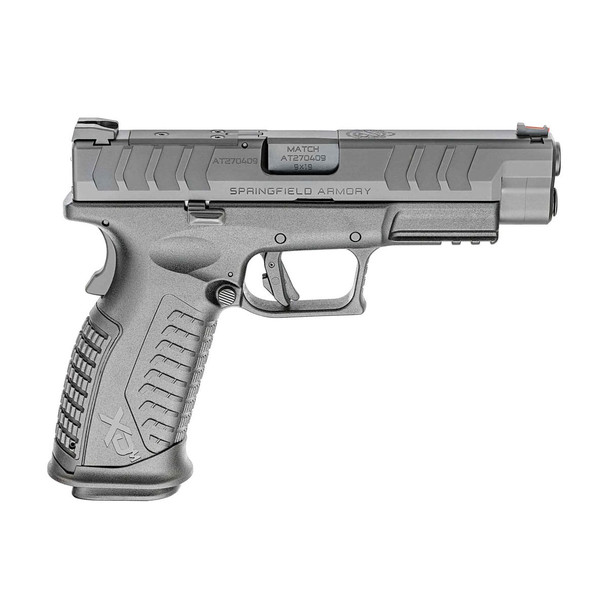
Springfield Armory Ronin 1911 EMP
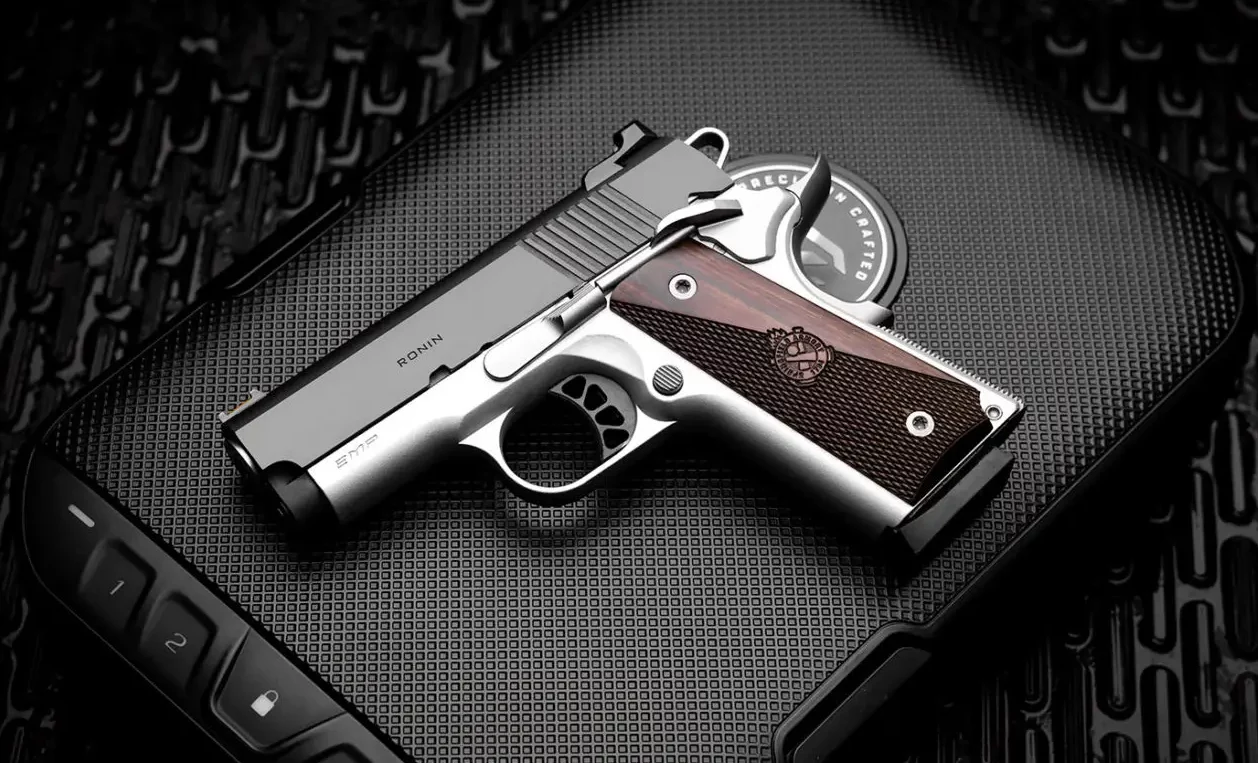
Springfield EMP Series in a Nutshell
The Springfield Armory EMP (Enhanced Micro Pistol) series stands apart in the world of compact 1911 pistols. Unlike traditional 1911s, which use the .45 ACP cartridge, the EMP was designed to fit the smaller 9mm rounds. Springfield didn’t just shrink the slide and barrel; they resized 17 different parts, leading to a shorter slide, frame, extractor, firing pin, and more. This results in a handier 1911, a more compact pistol with a reduced grip radius, which is extremely concealable.
Ronin 1911 EMP: The Springfield 1911 Pistol for Concealed Carry
In 2021, Springfield Armory expanded its Ronin lineup by introducing the Ronin EMP pistols.
The whole Ronin series of Springfield 1911 pistols is distinguished by its blend of classic aesthetics and modern functionality. Its eye-catching two-tone finish and highly durable construction are what sets the Ronin apart from other Springfield 1911 pistols.
So, the Ronin 1911 EMP merges the classic looks and modern efficiency of the Ronin series with the compact EMP design. Available in two models—one with a 3-inch barrel and another with a 4-inch barrel—both are chambered in 9mm. The 3-inch model holds 9+1 rounds, while the 4-inch version holds 10+1.
Both versions feature a forged carbon steel slide, a lightweight aluminum frame with a durable Cerakote finish, and a precisely fitted stainless steel bull barrel. Other standout features include an extended beavertail grip safety, a fiber optic front sight paired with a tactical rack rear sight, and Crossed Cannon wood grips. Ergonomically, the Ronin EMP pistols offer enhanced comfort through their reduced grip radius and are generally designed for better control during shooting.
Practical Use and Everyday Carry
Both Ronin 1911 EMP 9mm pistols are designed for concealed carry and everyday defense. The only things that are different across the models are their barrel length and capacity, which influence several aspects:
Concealability: The 3-inch model, with its shorter slide and grip, is highly concealable, making it ideal for those who prioritize a low-profile carry. The 4-inch model, while slightly larger, offers a balanced mix of concealability and control.
Shootability: The longer sight radius and added weight of the 4-inch model provide better accuracy and reduced muzzle flip and can be more comfortable to handle for shooters with larger hands. The 3-inch model, though more compact, might be more challenging to shoot for less experienced users due to its smaller grip area and lighter frame.
Recoil Control: Both models manage recoil well due to their lighter 9mm chambering and heavier build compared to polymer pistols. The 4-inch version especially handles recoil better, allowing for quicker follow-up shots.
Firepower: With capacities of 9+1 or 10+1 rounds, these pistols pack serious firepower for their size.
In short, the Ronin 1911 EMP series by Springfield Armory offers outstanding carry options with its thoughtful design, exceptional ergonomics, and durable components. Whether you’re new to concealed carry or a seasoned pro, these pistols are a solid choice for everyday defense.

The post Springfield Armory Pistols for EDC: Hellcat, XD, 1911 EMP [Review] appeared first on Blog.GritrSports.com.
Source link: https://blog.gritrsports.com/springfield-armory-pistols-for-cc/ by Maria Mamchits at blog.gritrsports.com
Predator Hunting
The Evolution of the Beretta 9mm Pistols: 92, APX, PX4

Modern Variants of the 92FS and M9
Since the 92FS was introduced, Beretta has rolled out tons of different models. Some were specifically made for law enforcement, like the 92G for the French police, which skips the manual safety and uses a decocker lever instead. Even though the original 92G was discontinued, its slide design lives on in models like the M9A4.
Then there’s the 92D, a model that gets rid of both the safety and decocker lever, relying solely on a double-action trigger. In the ’90s, Beretta also introduced the 96 series chambered in .40 S&W to keep up with law enforcement trends.
Brigadier slide
In 1993, the Brigadier-style slide came out with reinforced locking lugs for added durability and a unique “hump” in the slide’s contour. Although the extended lifespan due to this design is up for debate, many users have noted it reduces recoil and muzzle rise. Because of this, the Brigadier slide is popular in 92 variants used in action pistol competitions.
Come early 2000s, Beretta introduced the 92 Vertec. This model was designed for law enforcement and shooters with smaller hands, featuring a slim backstrap and a shorter reach trigger. It also had an accessory rail, beveled magazine well, and interchangeable front sights. Plus, it ditched the traditional barrel protrusion by shortening the barrel to 4.7 inches but kept the slide the same length.
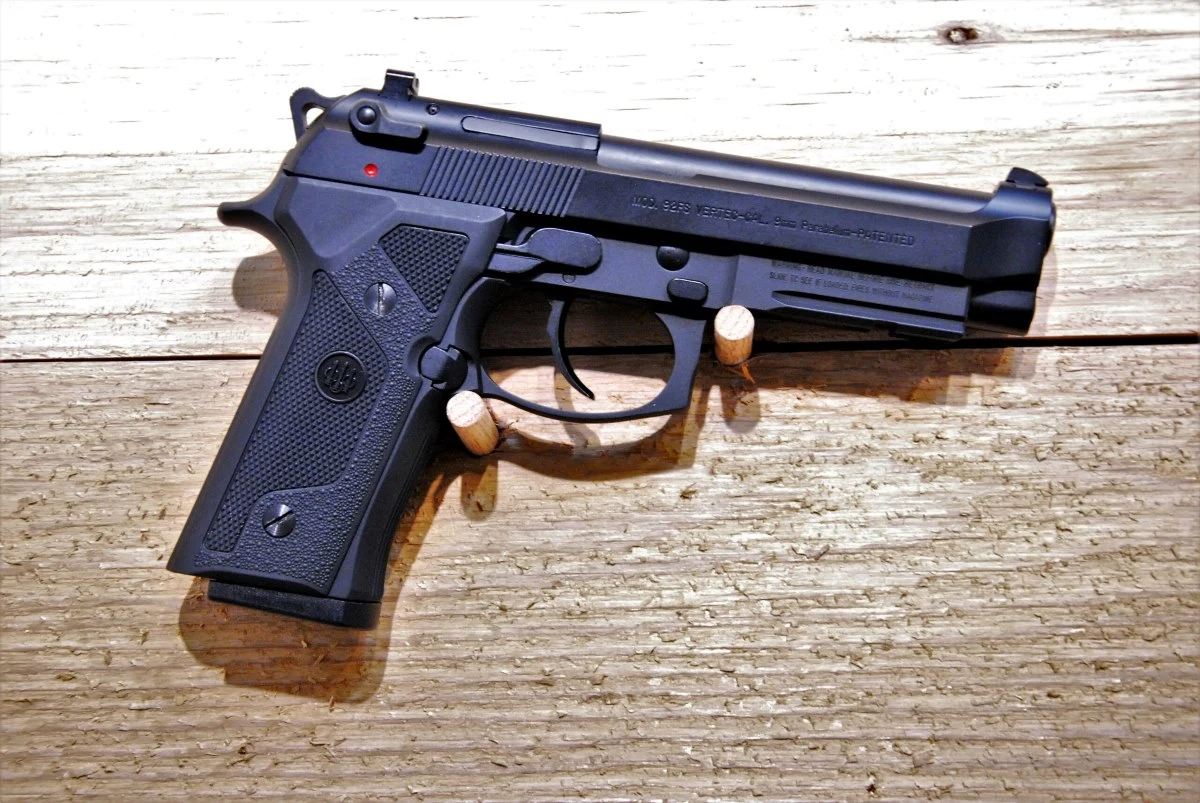
Beretta 92 Vertec
Many modern 92 series variants blend features from both the Brigadier and Vertec models. Examples include the 92FS Brigadier, 92X, M9A3, and M9A4.
The Beretta 92X, introduced in 2019, standardizes the Vertec platform and adds the “Xtreme-S” trigger system, which cuts trigger reset by 40% and offers adjustability for pre-travel (in SAO models) and overtravel. Other highlights include a 3-slot Picatinny rail, a slimmer vertical grip, removable wrap-around grips to switch between Vertec-style and the classic M9 feel, fully removable high-visibility sights, and a universal slide allowing conversion from decocker-safety to decocker-only mode.
The series also includes the 92X Centurion (18 rd), 92X RDO Compact (15 rd) pistols, 92X Performance Carry Optic featuring an optic cut for USPSA competitors, and the lightweight 92X Performance Defensive for IDPA competitions.
New additions to the 92 family are the 92XI and 92GTS pistols. The 92XI is an SAO pistol with a 1911-style frame-mounted safety and comes in a base model, a Tactical model with a threaded barrel and DLC-coated trigger components, and a flashy Squalo edition. Meanwhile, the 92GTS is DA/SA with a twin sear and a decocker-only configuration.
Now, let’s get back to the M9. Around the mid-2000s, the US military requested some tweaks to the original design. Beretta responded with the M9A1, which borrowed features from the 92G-SD like a railed frame, standard 92 grip contour, beveled mag well, and textured grip while keeping the original M9 slide mostly the same.
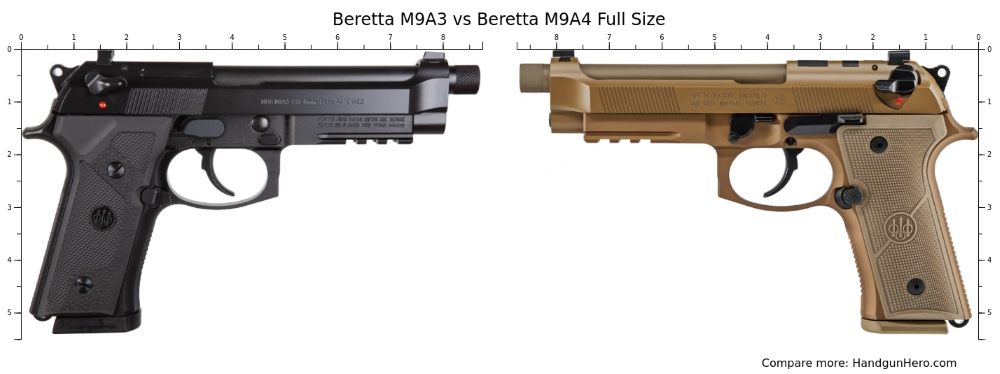
Almost a decade later, Beretta rolled out the M9A3, featuring a replaceable front sight, a railed frame, and a Vertec-style backstrap with an aggressive grip texture. It also includes a wraparound rubber grip to replicate the feel of the standard M9A1 backstrap. The standout feature of the M9A3 is a redesigned slide that allows the gun to switch between FS and G configurations using a conversion kit, something that previously required an expensive and permanent modification by a gunsmith.
The latest iteration, the Beretta M9A4, boasts a red-dot optic compatible slide, dovetailed tritium night sights, an enhanced short-reset Xtreme Trigger System, 18-round sand-resistant magazines, and textured Vertec-style thin grips.
Source link: https://blog.gritrsports.com/beretta-9mm-pistols-92-apx-px4/ by Gritr Sports at blog.gritrsports.com